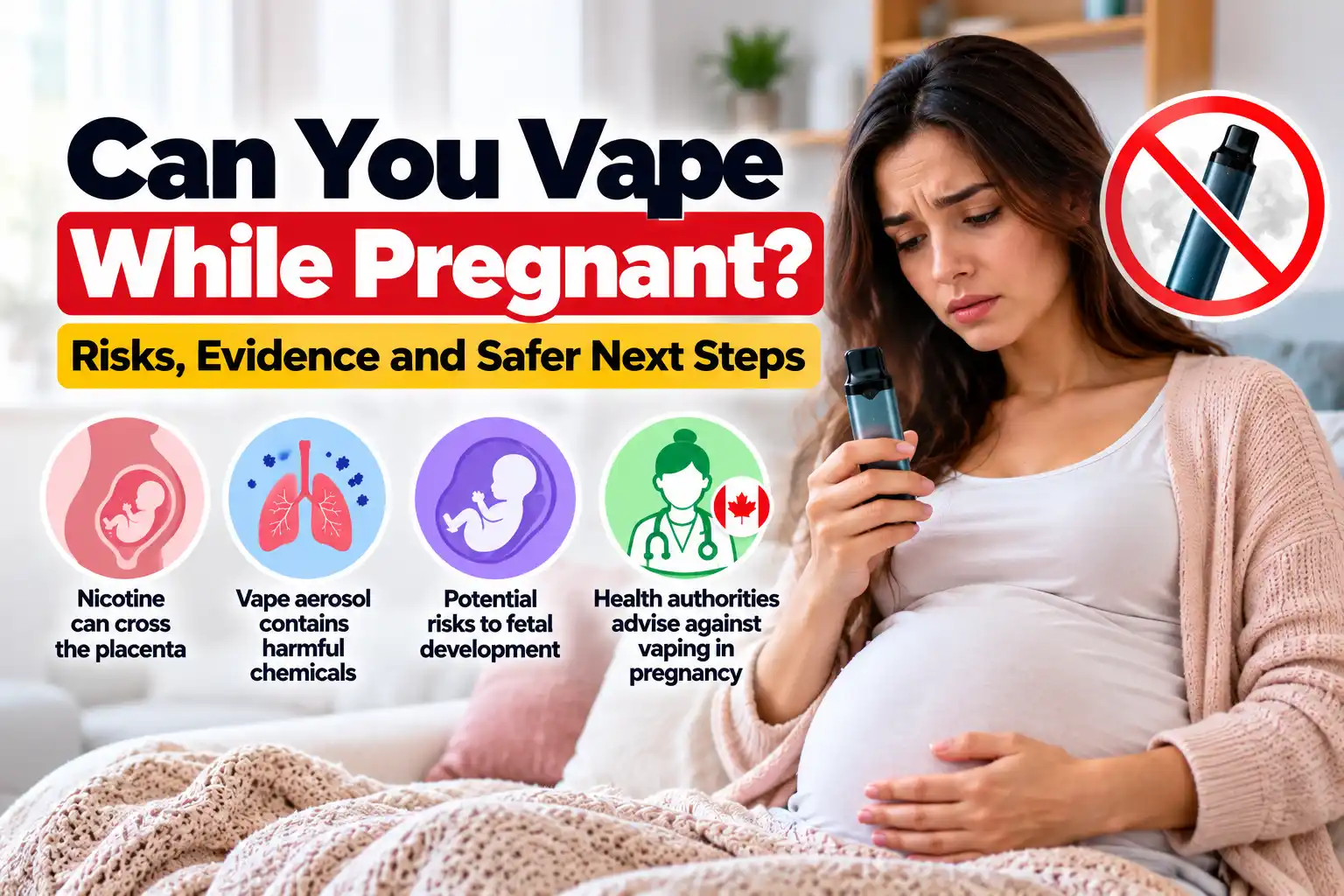
Can You Vape While Pregnant? Risks, Evidence and Safer Next Steps
Can you vape while pregnant? Health authorities in Canada and the United States advise against it. Most vapes contain nicotine, which can cross the placenta and expose a developing fetus. Vape aerosol can also contain chemicals and particles that should not be assumed harmless during pregnancy.
The evidence on pregnancy outcomes from vaping is still developing, and researchers do not know the full effects of every device, liquid, flavoring or exposure pattern. That uncertainty does not make vaping safe.
There is one important distinction for people who smoke cigarettes. Vaping avoids combustion and many of the toxic chemicals produced by smoking. Some UK health guidance therefore considers vaping less harmful than continuing to smoke when it helps a pregnant smoker stop cigarettes completely. That does not mean starting or continuing to vape during pregnancy is risk-free.
Here is what current evidence and major health authorities actually say.
Table of Contents
- Is vaping safe during pregnancy?
- Why nicotine matters
- What’s in vape aerosol?
- What pregnancy research shows
- Vaping vs. smoking
- Nicotine-free vapes
- Cannabis and CBD vaping
- Secondhand aerosol
- What to do if you already vaped
- How to get help quitting
- FAQs
Can You Vape While Pregnant? The Short Answer
The lowest-exposure option is not to smoke or vape during pregnancy.
The Public Health Agency of Canada states that vaping products can expose a developing baby to nicotine and other potentially harmful substances. Its national maternity guidance says avoiding tobacco cigarettes and vaping products is the safest option during pregnancy.
The U.S. Centers for Disease Control and Prevention also states that e-cigarettes and other nicotine-containing products are not safe during pregnancy.
This advice applies even though vaping and smoking are not identical exposures.
For someone who does not smoke cigarettes, pregnancy is not a reason to begin vaping. For someone who already vapes, discussing cessation with a healthcare professional is appropriate.
For a pregnant person who smokes cigarettes, the situation needs additional context because returning to or continuing smoking can introduce the well-established harms of combustible tobacco.
Why Is Nicotine a Concern During Pregnancy?
The relationship between nicotine and pregnancy is one of the clearest reasons health authorities advise against vaping.
Nicotine can cross the placenta, meaning fetal exposure can occur when a pregnant person uses nicotine.
CDC states that nicotine is toxic to developing fetuses and can damage the developing brain and lungs. The American College of Obstetricians and Gynecologists also advises pregnant patients to stop tobacco and nicotine products, including e-cigarettes.
This concern is not limited to traditional cigarettes.
Nicotine may be delivered through disposable vapes, pod systems, refillable devices and other electronic nicotine delivery systems.
Some modern products use nicotine salts, which can allow nicotine-containing aerosol to be inhaled with less throat irritation than some traditional freebase nicotine formulations.
That is why the absence of tobacco combustion does not remove the concern about fetal nicotine exposure.
What Is in Vape Aerosol Besides Nicotine?
Another problem with vaping during pregnancy is that nicotine is not the only potential exposure.
A vape heats an e-liquid to create an aerosol. It is inaccurate to describe that aerosol as harmless water vapor.
Depending on the product and how it is used, e-cigarette aerosol can contain substances such as:
- Nicotine
- Ultrafine particles
- Volatile organic compounds
- Carbonyl compounds
- Metals
- Flavoring-related chemicals
Health Canada notes that vaping can expose users to harmful chemicals such as formaldehyde and acrolein as well as metals and contaminants including nickel and lead.
The amounts can vary substantially by product, formulation and operating conditions.
This variability is important during pregnancy because there is no single standard “vape aerosol” that represents every device on the market.
If you want a basic explanation of how these products are constructed, our guide to what a vape looks like covers common device components.
What Are the Effects of Vaping While Pregnant?
Research specifically examining pregnancy and e-cigarette use is less extensive than decades of research on cigarette smoking.
That makes careful wording essential.
CDC reports that e-cigarette use during pregnancy has been associated with preterm birth and low birth weight. An association does not automatically prove that vaping caused the outcome.
Pregnancy studies can be difficult to interpret because some people who vape also smoke cigarettes, previously smoked, use different products, or have other factors that influence pregnancy outcomes.
Researchers therefore have to account for potential confounding.
The evidence does not justify saying that every person who vapes will experience a pregnancy complication. It also does not establish a safe amount of vaping during pregnancy.
Given known concerns about nicotine and remaining uncertainty about other aerosol constituents, major North American health authorities recommend avoiding e-cigarettes during pregnancy.
Is Vaping Safer Than Smoking While Pregnant?
This question requires more nuance than a simple yes or no.
Cigarette smoke contains carbon monoxide and numerous toxic products of combustion. Vaping does not involve burning tobacco and generally exposes users to fewer harmful chemicals than cigarette smoking.
The NHS states that current evidence indicates e-cigarettes are much less risky than smoking. Its pregnancy guidance says that if using an e-cigarette helps someone stop smoking, it is safer for that person and their baby than continuing to smoke cigarettes.
However, this should not be interpreted as meaning vaping is safe during pregnancy.
Canadian guidance says the safest option is to avoid both tobacco cigarettes and vaping products during pregnancy. CDC similarly advises pregnant people not to use e-cigarettes.
The practical message is:
- If you neither smoke nor vape, do not start vaping during pregnancy.
- If you vape, discuss stopping with your healthcare provider.
- If you smoke cigarettes, quitting smoking is particularly important.
- Do not assume returning to cigarettes is safer than continuing a cessation strategy.
- Ask a healthcare professional about appropriate cessation support during pregnancy.
This distinction avoids two misleading extremes: claiming vaping is harmless because it avoids smoke, or implying that vaping and smoking have identical toxicant profiles.
What About Using Both Cigarettes and Vapes?
Using cigarettes and e-cigarettes together is often called dual use.
It should not be treated as a way to make smoking safe.
Continuing to smoke maintains exposure to cigarette combustion products even if the number of cigarettes is reduced.
For someone attempting to stop smoking during pregnancy, the goal should be discussed with a prenatal healthcare professional rather than assuming that adding vaping to continued cigarette smoking provides adequate protection.
Our guide explaining why people vape discusses smoking substitution and other common reasons people use e-cigarettes.
Are Nicotine-Free Vapes Safe During Pregnancy?
People asking can you vape while pregnant sometimes assume a zero-nicotine product solves the problem.
Removing nicotine would remove one major concern, but it would not establish that inhaling the resulting aerosol is safe for a developing fetus.
A nicotine-free e-liquid can still contain solvents, flavoring ingredients and other substances that are heated and inhaled.
There is insufficient evidence to establish nicotine-free vaping as safe during pregnancy.
Product accuracy can also be a concern. A label is not independent laboratory confirmation of everything present in an e-liquid.
For these reasons, “0 mg nicotine” should not be interpreted as “pregnancy safe.”
What About Cannabis, THC or CBD Vapes?
Cannabis vaping requires separate consideration from nicotine vaping.
Major pregnancy guidance recommends avoiding cannabis during pregnancy. ACOG advises pregnant patients not to use marijuana, and cannabis vaping should not be treated as a safer workaround.
THC exposure creates concerns separate from nicotine exposure.
CBD should not automatically be treated as safe either. “CBD-only,” “natural,” or “nicotine-free” are product descriptions, not evidence that inhalation during pregnancy is harmless.
People using cannabis for nausea, sleep, pain or another symptom during pregnancy should discuss those symptoms and cannabis use with a healthcare professional rather than replacing one inhaled product with another without medical guidance.
What About Secondhand Vape Aerosol During Pregnancy?
Direct vaping is not the only possible source of exposure.
People nearby can inhale substances released into indoor air when someone vapes. Health Canada recommends a smoke- and vape-free environment during pregnancy.
This makes avoiding indoor vaping a sensible precaution, particularly in homes and vehicles.
Secondhand vape aerosol should not be described as identical to secondhand cigarette smoke because their chemical profiles differ. However, “different from cigarette smoke” does not mean “nothing but harmless water.”
What If You Vaped Before Knowing You Were Pregnant?
Discovering a pregnancy after having already vaped can understandably cause concern.
Past exposure does not mean a pregnancy complication will occur.
The useful next step is to stop further exposure where possible and tell your prenatal healthcare provider about nicotine, tobacco, cannabis, vaping products and other relevant substance use.
ACOG notes that smoking cessation at any point during pregnancy benefits the pregnant person and fetus, with greater benefits generally associated with earlier cessation.
CDC similarly emphasizes that quitting early or before pregnancy is best but that it is never too late to quit smoking.
The same practical principle supports addressing vaping as soon as pregnancy is recognized rather than assuming the opportunity to reduce exposure has passed.
How Can You Stop Vaping During Pregnancy?
If nicotine dependence makes quitting difficult, seek professional support rather than improvising a medication or nicotine plan.
Behavioral counseling and structured cessation support can help people stop tobacco use.
In Canada, healthcare professionals can discuss appropriate options based on the person’s nicotine use, smoking history, pregnancy and other health considerations.
The U.S. CDC recommends that pregnant people who have been unable to quit smoking talk with their healthcare provider about the risks and benefits of FDA-approved medications.
UK guidance differs somewhat. The NHS recommends licensed nicotine replacement therapy, such as patches or gum, when needed to help a pregnant person stop smoking and says this should be discussed with a healthcare professional or stop-smoking adviser.
These recommendations illustrate why pregnancy cessation treatment should not be copied from a generic quit-vaping plan. Individual circumstances and national clinical guidance matter.
Should You Use Nicotine Replacement Therapy During Pregnancy?
Do not assume that switching independently from a vape to nicotine patches, gum or another medication is automatically appropriate.
Recommendations differ somewhat across healthcare systems.
The NHS permits NRT during pregnancy when it helps someone stop smoking and they cannot quit without it. ACOG recommends individualized care and notes that evidence about pharmacotherapy during pregnancy requires weighing risks and benefits.
The appropriate option depends on factors such as whether the person smokes cigarettes, how dependent they are on nicotine, previous quit attempts and their medical history.
A prenatal healthcare professional can help make that decision.
Common Myths About Vaping and Pregnancy
“Vape Aerosol Is Just Water Vapor”
It is not.
E-cigarettes produce an aerosol that can contain nicotine, particles and other chemicals. Its composition varies by device and liquid.
“Nicotine-Free Means Safe”
Not necessarily.
Removing nicotine eliminates one important exposure but does not prove the remaining heated aerosol is safe during pregnancy.
“Vaping Is Exactly as Harmful as Smoking”
That is also too simplistic.
Cigarette smoking exposes users to combustion products, including carbon monoxide. Vaping avoids tobacco combustion and generally involves fewer harmful chemicals, but that does not make it risk-free or recommended during pregnancy.
“A Few Puffs Are Proven Safe”
There is no established number of vape puffs that health authorities define as safe during pregnancy.
Avoid translating uncertainty into a supposed safe threshold.
Frequently Asked Questions
Can You Vape While Pregnant Without Nicotine?
Nicotine-free vaping is not established as safe during pregnancy. Although removing nicotine eliminates one important concern, the aerosol can still contain other substances, and evidence on fetal exposure to many vaping ingredients remains limited.
Is Vaping Safe During Pregnancy?
Major Canadian and U.S. health authorities advise against e-cigarette use during pregnancy. Nicotine can expose the fetus, and vape aerosol can contain additional potentially harmful substances.
Is Vaping Better Than Smoking During Pregnancy?
For someone who currently smokes cigarettes, UK health guidance considers vaping less harmful than continuing to smoke because vaping avoids tobacco combustion and carbon monoxide. This does not make vaping safe. Pregnant smokers should seek professional cessation support
Can Vaping Cause a Miscarriage?
Current evidence does not allow a simple claim that vaping directly causes miscarriage in an individual pregnancy. Research into pregnancy outcomes from e-cigarette use is still developing.
Can Vaping Cause Low Birth Weight?
CDC reports an association between e-cigarette use during pregnancy and low birth weight as well as preterm birth. Association does not by itself establish causation, and pregnancy research can be affected by smoking and other confounding factors.
Editorial & Health Note
This article is for general informational purposes and is not medical advice. Health-related claims are researched under our Health & Safety Editorial Standards and Fact Checking policy. We only describe an article as medically reviewed when a qualified reviewer actually reviewed it and is identified.