Are Vapes Banned in Texas? 2026 Vape Laws Explained
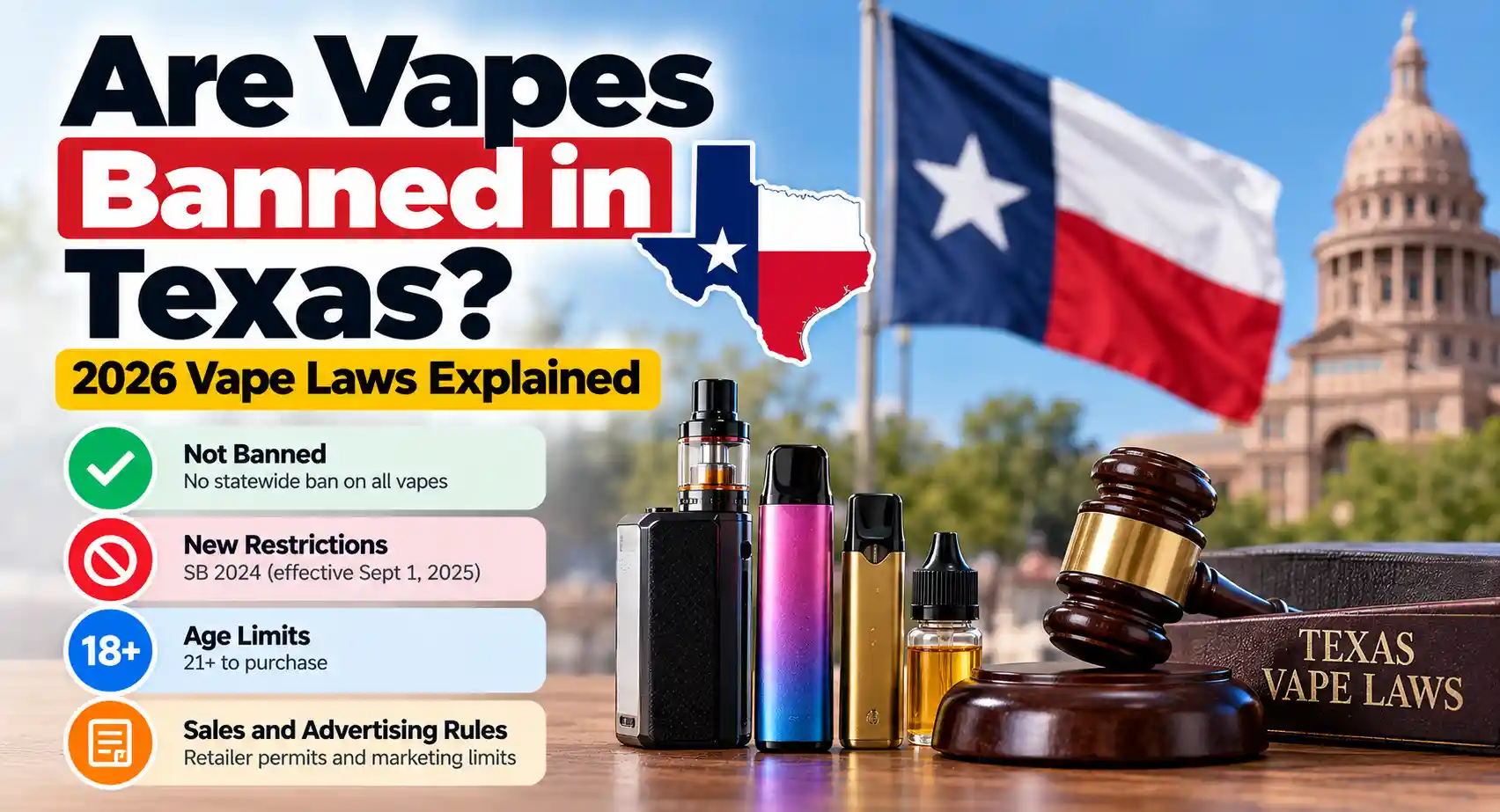
Are vapes banned in Texas? No. Texas does not have a blanket ban on every vape or all nicotine vaping products. However, the rules changed significantly on September 1, 2025, when Senate Bill 2024 took effect. The law prohibits the marketing, advertising, sale, or offer for sale of several categories of e-cigarette products based on factors such as manufacturing origin, ingredients, device design, and packaging.
Texas also introduced additional advertising restrictions in 2025, while federal rules continue to govern minimum purchase age and the marketing of tobacco products.
That means the simple claim that “Texas banned vapes” is misleading. Some products cannot legally be marketed or sold in the state, while others are not prohibited by SB 2024 merely because they are vapes.
This guide explains the current Texas vape laws, which products are affected, what the rules mean for disposables and flavored products, how possession differs from sale, and how state rules interact with federal requirements.
Table of Contents
- Quick answer
- What changed under SB 2024
- Which products are prohibited
- Disposable and flavored vapes
- Sale versus possession
- Age and ID requirements
- Advertising restrictions
- Texas vape taxes
- State versus federal rules
- FAQs
Are Vapes Banned in Texas in 2026?
No blanket statewide law prohibits every vaping product. Instead, Texas prohibits specified products and certain marketing and advertising practices.
SB 2024 became effective on September 1, 2025. According to the Texas Comptroller, enforcement of the amended provisions began on the same date, with no grace period for retailers.
The law matters because it looks at more than nicotine. Texas defines an e-cigarette product for these provisions as a consumable liquid solution or other material aerosolized or vaporized during use, regardless of whether it contains nicotine.
A product can therefore be affected because of what it contains, where it was manufactured, how it is packaged, or whether its design disguises it as another item.
This targeted system is the key to understanding the Texas vape ban.
What Changed Under Texas Senate Bill 2024?
SB 2024 expanded Section 161.0876 of the Texas Health and Safety Code. It prohibits a person from marketing, advertising, selling, offering for sale, or causing to be sold certain e-cigarette products.
The legislation also increased the offense for prohibited conduct under that section from a Class B misdemeanor to a Class A misdemeanor.
One particularly important change is the broader definition of covered e-cigarette products. The rules are not limited to products containing nicotine.
For retailers, this means product screening cannot stop at checking nicotine strength or whether an item is disposable. Origin, contents, presentation, and packaging can all matter.
Which Vape Products Are Prohibited From Sale in Texas?
When people ask are vapes banned in Texas, they are often reacting to products disappearing from store shelves. SB 2024 identifies several categories that cannot be marketed or sold.
Products Manufactured in China or Other Foreign-Adversary Countries
Texas prohibits covered e-cigarette products wholly or partially manufactured in China or another country designated as a foreign adversary under the federal definition referenced by the law.
As of April 1, 2026, the Texas Comptroller identifies China, Cuba, Iran, North Korea, and Russia as the relevant foreign-adversary countries.
“Manufactured” is broader than the location of a brand’s headquarters. Texas guidance says manufacturing includes activities such as blending or processing the product, inserting or pouring material into an e-cigarette device or container, and wrapping or packaging a prefilled device or container.
This provision has major practical importance because manufacturing location, not just branding or the seller’s location, can determine whether a product falls within the prohibition.
Products Containing Certain Substances
The law also prohibits covered e-cigarette products containing, mixed with, or marketed as containing or being mixed with specified substances.
The Texas Comptroller lists cannabinoids, alcohol, kratom, kava, mushrooms, tianeptine, and derivatives of those substances among the prohibited categories.
As a result, the law reaches beyond ordinary nicotine e-cigarettes.
Disguised Vape Devices
SB 2024 also targets devices designed or shaped to disguise themselves as other products.
Examples identified in Texas guidance include devices made to resemble school or office supplies, smartphones or other smart devices, headphones, clothing, backpacks, cosmetics, and toys.
This is different from banning a normal vape simply because it is compact. The issue is a design that disguises the product as another type of item.
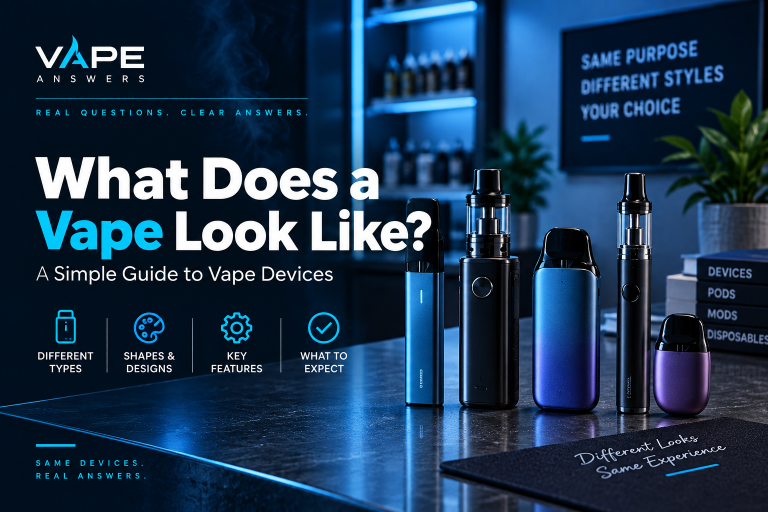
If you need a basic overview of conventional device formats, our guide to what a vape looks like explains common vape components and designs.
Certain Youth-Oriented Packaging
Texas already restricted specified packaging features associated with products aimed at minors, and the current framework retains and expands the state’s approach to youth-oriented presentation.
Examples include certain cartoon-like characters, imitation trademarks or trade dress associated with products marketed to minors, celebrity names or images, and specified imagery resembling food products.
Are Disposable Vapes Banned in Texas?
For readers asking are vapes banned in Texas, disposable products are one of the biggest sources of confusion.
The answer to are disposable vapes banned in Texas is no, not solely because they are disposable.
The important question is whether the individual disposable falls within a prohibited category.
For example, a disposable e-cigarette wholly or partly manufactured in China would be affected by the manufacturing-origin provision. A disposable containing cannabinoids would fall within another prohibited category. A product disguised as a school supply or other listed item could also be prohibited.
This distinction matters because “disposable” describes a product format, not its complete legal status.
The same principle applies to rechargeable disposables, pod devices, and other configurations. Product design alone does not answer every compliance question.
Are Flavored Vapes Banned in Texas?
Texas does not impose a simple statewide ban on every e-cigarette because it has a fruit, mint, dessert, or other flavor.
However, a flavored product can still be prohibited because of manufacturing origin, ingredients, packaging, disguised design, or another applicable rule.
Federal requirements also apply independently.
Therefore, describing all flavored vapes as either universally legal or universally banned in Texas would be inaccurate. The characteristics of the specific product matter.
Sale vs. Possession: An Important Difference
SB 2024 focuses on commercial conduct.
The statutory language prohibits marketing, advertising, selling, offering for sale, or causing specified e-cigarette products to be sold. It does not create a general possession offense simply for possessing one of the products covered by those sales restrictions.
That does not mean possession is always lawful in every circumstance.
Different laws may apply to controlled substances, schools, people below the legal purchase age, or other situations. The point is narrower: a restriction on selling a product and a prohibition on possessing that product are not automatically the same thing.
This distinction is especially important when interpreting headlines about the Texas vape ban.
How Old Do You Have to Be to Buy a Vape in Texas?
Federal Tobacco 21 law makes it illegal for a retailer to sell tobacco products, including e-cigarettes, e-liquids, and other electronic nicotine delivery systems, to anyone under 21.
FDA rules also require retailers to check photo identification for anyone under 30 who attempts to purchase covered tobacco products.
These age rules are separate from SB 2024.
A retailer cannot legally sell a prohibited e-cigarette product merely because the customer is over 21. Likewise, a product that is otherwise permitted remains age restricted where federal tobacco law applies.
Texas Vape Advertising Restrictions
Texas enacted additional e-cigarette advertising restrictions effective September 1, 2025.
Senate Bill 1316 prohibits certain outdoor signs advertising e-cigarettes within 1,000 feet of a church or school.
Senate Bill 1313 addresses signs, logos, and design marks used in marketing, advertising, or selling cigarettes, tobacco products, and e-cigarettes when they contain or mimic specified imagery primarily aimed at minors or resemble food products.
These rules demonstrate why the answer to are vapes banned in Texas cannot be reduced to what products are sitting on a shelf. Texas also regulates how covered products can be advertised.
Is There a Texas Vape Tax?
E-cigarettes are subject to Texas state and local sales taxes.
However, the Texas Comptroller has explained that e-cigarettes and e-liquids do not meet the statutory definition of a cigarette and therefore are not subject to the Texas cigarette tax.
This distinction is important when discussing Texas vape tax rules.
“No cigarette tax” does not mean “tax free.” Ordinary state and applicable local sales taxes can still affect the amount paid at checkout.
Tax treatment is also separate from product legality. Paying sales tax on an item does not establish that the product satisfies every requirement under SB 2024 or federal law.
For readers comparing costs, our guide to how much a vape costs explains the main factors that influence vape pricing.
Texas Law vs. Federal Vape Rules
Another reason are vapes banned in Texas needs a qualified answer is that state and federal rules operate together.
Texas law is only one layer of regulation.
Federal law controls areas that include the minimum tobacco sales age and FDA regulation of electronic nicotine delivery systems.
FDA says retailers may sell e-cigarettes, e-liquids, and other ENDS only to customers aged 21 or older and must check photo identification for purchasers under 30.
Federal marketing authorization is another important issue. A product being outside a Texas SB 2024 prohibition does not itself establish that the product has FDA authorization to be marketed.
The reverse distinction also matters when analyzing compliance. State restrictions can apply independently of federal requirements.
A retailer or consumer therefore should not treat one legal test as a substitute for all the others.
Frequently Asked Questions
Did Texas Ban Vapes in 2025?
Texas did not ban every vape. SB 2024 took effect September 1, 2025 and expanded prohibitions involving specified e-cigarette products based on manufacturing origin, contents, packaging, and design. It also increased the relevant offense to a Class A misdemeanor.
Are Chinese-Made Vapes Banned in Texas?
SB 2024 prohibits covered marketing, advertising, sale, or offer for sale of e-cigarette products wholly or partially manufactured in China.
The restriction also extends to other countries designated as foreign adversaries under the federal definition incorporated by the Texas law.
Are THC or Cannabinoid Vapes Banned in Texas?
SB 2024 prohibits marketing and sale of e-cigarette products that contain, are mixed with, or are marketed as containing or being mixed with cannabinoids.
Other Texas and federal laws can separately apply to cannabis and controlled substances. This means the legal status of a cannabinoid product should not be determined from SB 2024 alone.
Can You Buy Flavored Vapes in Texas?
Texas does not ban every e-cigarette merely because it is flavored.
A flavored product can nevertheless be prohibited because of its manufacturing origin, ingredients, packaging, design, or another state or federal requirement.
Flavor by itself is therefore not enough information to determine whether a particular vape may legally be marketed or sold.
Can You Order Vapes Online in Texas?
Online ordering does not create an exemption from Texas product restrictions or federal requirements.
Whether a particular transaction is lawful depends on the product, seller, age-verification requirements, delivery requirements, and other applicable state and federal laws.
Consumers should not assume that the availability of an online checkout option proves that a particular product complies with Texas law.
Legal & Regulatory Note
This article provides general regulatory information, not legal advice. Vape laws, product directories, enforcement policies and agency guidance can change. We research legal and regulatory claims under our Editorial Policy and Fact Checking standards, prioritizing current government and regulatory sources. Check the relevant official authority before relying on an older rule or product status.