Do All Vapes Contain Nicotine? Zero-Nicotine Labels Explained
No, not all vapes contain nicotine. Most electronic cigarettes do, but some e-liquids and prefilled products are sold with a 0 mg/mL or 0% nicotine label. The CDC notes that certain products advertised as containing no nicotine have nevertheless been found to contain it. The practical answer to do all vapes contain nicotine requires separating the product’s claims from its verified chemical content.
A zero-nicotine label does not make the device’s aerosol harmless. Vaping aerosol may still contain tiny particles, chemicals from flavorings, metals and other substances of concern. People who do not use tobacco or nicotine should not start vaping.
Table of contents
Why many e-cigarettes contain nicotine
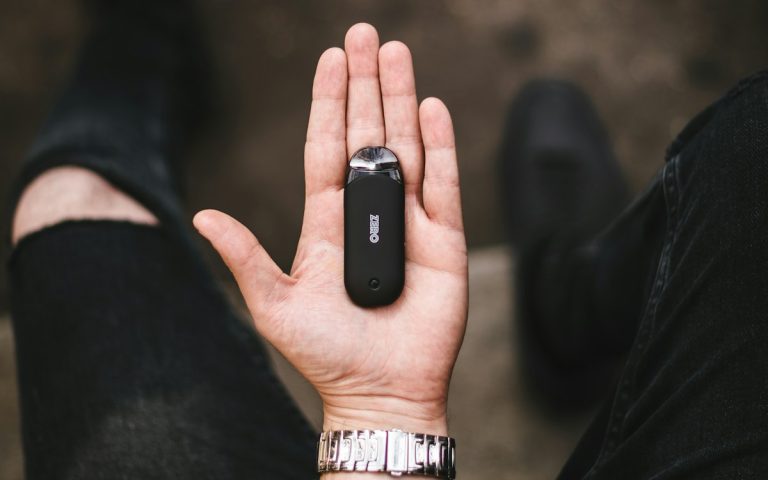
Nicotine is addictive and is commonly included in the liquid heated by e-cigarette devices. It may be formulated as freebase nicotine or nicotine salts. The battery housing and screen ordinarily do not tell you how much nicotine is inside; nicotine concentration belongs to the liquid or prefilled cartridge.
Some refillable systems can use different compatible liquids, while other products arrive with a sealed reservoir. The manufacturer and exact model matter. A product’s outer appearance cannot establish that an inserted pod or liquid is the same as the original packaging.
What kinds of vape can be nicotine-free?
The question do all vapes contain nicotine often arises because devices come in different formats. Product format is not a reliable ingredient test.
- Refillable e-liquid bottles: some are labeled as nicotine-free, while many state a positive nicotine concentration.
- Prefilled pods: liquid composition is specific to the actual cartridge, not the battery or pod-system brand alone.
- Disposable e-cigarettes: most contain nicotine, but some are sold with zero-nicotine labeling.
- Rechargeable devices: charging a device does not reveal or change the chemical contents of its reservoir.
- Unidentified liquids: missing or damaged labels mean composition is unknown, not automatically nicotine-free.
Do not open sealed devices or use homemade liquids to test a nicotine claim. Device compatibility and chemical safety are different issues.
How to read nicotine strength on labels
Most liquid strengths are expressed in milligrams per milliliter, or mg/mL. Percentages are also used. Under a common mass-per-volume convention, 20 mg/mL corresponds to 2% and 50 mg/mL to 5%. Always read the product-specific label and applicable jurisdiction because numbers can be presented in different ways.
A product labeled 0 mg/mL makes a zero-nicotine claim. A product labeled 3 mg/mL contains a stated positive concentration, which is not equivalent to zero. Bottle volume, such as 10 or 30 mL, describes a different measurement and cannot be interpreted as nicotine strength.
A stated concentration does not tell you how much nicotine a person absorbs. Delivery can vary with formulation, device behavior and puff patterns. Our nicotine strength explainer separates labeled strength from the amount inhaled.
Can a 0% label be wrong?
Yes. The CDC specifically warns that some e-cigarettes marketed as containing zero nicotine have been found to contain it. This finding is important when answering do all vapes contain nicotine, but it is not evidence that every nicotine-free product is mislabeled.
Possible issues include inaccurate labeling, contamination or counterfeit goods. A picture of an unverified lab result is not enough to prove what is in a specific product batch. For stronger assurance, a credible report should identify the exact product, batch, testing method and result.
If a bottle’s label is unclear, contradictory or missing, avoid tasting or smelling it as a test. A pleasant flavor or a familiar package color is not a measurement of nicotine concentration.
Nicotine salts and freebase nicotine
Both of these terms refer to formulations that contain nicotine. Nicotine salts generally involve nicotine combined with an acid, while freebase nicotine is another formulation. A product can have different sensory characteristics without becoming nicotine-free.
A bottle saying “nic salt” still needs a concentration label. Some high-strength products may feel less harsh, but perceived smoothness cannot tell you how much nicotine is delivered. See our nicotine salt and freebase comparison for the details.
Does nicotine-free mean safe to inhale?
No. Nicotine is only one possible component of vaping aerosol. The CDC states that the aerosol is not just water vapor. Depending on the product and how it is heated, the aerosol may contain metals, volatile organic compounds, fine particles and substances from flavorings.
Some flavors used in foods have not been established as safe for inhalation. A zero-nicotine claim is not evidence of overall purity or long-term respiratory safety. Composition can differ between brands, batches and types of devices.
It is therefore important not to confuse do all vapes contain nicotine with “are vapes safe?” One asks whether an addictive ingredient is present. The other requires evidence about the full aerosol and the consequences of exposure.
Tobacco-derived and synthetic nicotine
Many nicotine formulations use nicotine derived from tobacco. Other products may use synthetically produced nicotine. In either case, nicotine remains an addictive substance. A marketing phrase such as “tobacco-free nicotine” may describe sourcing, not the absence of nicotine itself.
The FDA regulates electronic nicotine products under tobacco-product law, including nicotine from non-tobacco sources. A product’s legal status depends on its specific characteristics and jurisdiction, not just the source of nicotine.
Can a device screen detect nicotine?
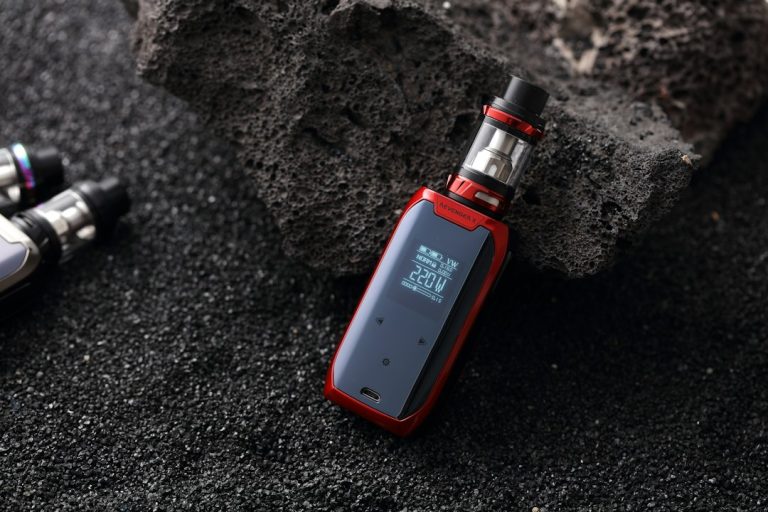
No typical vaping device has a display capable of chemically analyzing its own liquid. A power setting, battery percentage, puff counter or lock icon does not verify concentration. The cartridge and bottle labels are the relevant starting points, subject to their limitations.
If packaging is suspect, our guide to spotting a fake vape explains which packaging signs are informative and which cannot independently establish authenticity.
What about secondhand aerosol?
People nearby may inhale aerosol exhaled by someone using an e-cigarette. Even if nicotine is absent, other airborne substances remain possible. Building rules or laws on vaping may apply regardless of whether the liquid contains nicotine.
Do not assume zero-nicotine labeling gives permission to vape in a smoke-free workplace, school, hotel or other shared indoor space. Restrictions vary by location.
Safe handling and accidental exposure
Nicotine liquid can cause poisoning if swallowed, and skin or eye exposure may also be dangerous. Keep liquid bottles secured out of reach of children and pets, preferably in original containers with clear labels. Unidentified and allegedly nicotine-free liquids should also be stored safely.
Do not taste or swallow liquid to investigate ingredients. In the United States, Poison Control can be reached at 1-800-222-1222. Serious symptoms such as seizures or breathing problems require emergency medical assistance.
Frequently asked questions
Does every disposable vape have nicotine?
No. Disposable refers to the device format, not a guaranteed formulation. Many have nicotine and some are sold with zero-nicotine claims.
Is 0 mg/mL the same as low nicotine?
No. Zero is a claim of no nicotine; a positive concentration is still nicotine-containing.
Can flavor tell you if nicotine is present?
No. Fruit, mint and tobacco-style flavors occur at different strengths. Flavor alone cannot establish contents.
Is synthetic nicotine still addictive?
Yes. Nicotine’s potential for addiction does not depend on whether it came from tobacco or a synthetic manufacturing process.
Can a nicotine-free vape affect the lungs?
Yes. The aerosol may still carry substances of concern even when nicotine is absent.
Bottom line
So, do all vapes contain nicotine? No. Nicotine-free labeled products exist, while most e-cigarettes contain nicotine. Some products have been mislabeled, which is why the exact liquid and reliable evidence matter more than a device’s appearance. Neither zero-nicotine labeling nor an appealing flavor proves the aerosol is harmless.
When checking do all vapes contain nicotine, treat a nicotine-free statement as a claim that can be independently tested, not an assurance about the remaining ingredients or the safety of aerosol exposure.