Are Vape Puff Counts Accurate? Understanding ‘Up To’ Claims
Vape puff counts are estimates rather than guarantees. A package advertising “up to” a number of puffs may describe controlled machine tests, while actual use varies with draw duration, frequency and hardware. The answer to are vape puff counts accurate is that they can describe a manufacturer’s particular test but generally cannot predict how many draws one person will get.
An e-cigarette’s advertised count is not a measure of nicotine absorbed, product authenticity, safety or battery capacity. Brands do not necessarily disclose comparable testing methods, making direct comparisons especially uncertain.
For readers asking are vape puff counts accurate, the first distinction is between a single electronic activation and a test-method estimate of how many activations a product may deliver.
Table of contents
What is a puff count?
A puff is an activation or draw of a vaping device, but there is no fixed duration in ordinary human use. One draw may be short while another lasts several seconds. Different durations can produce different amounts of aerosol and consume different quantities of liquid.
Manufacturers may use automated puffing machines that take repeated draws at controlled durations and intervals. Such machines can help produce repeatable data. They do not replicate the individual habits of everyone who will use the device.
Vuse explains that its marketed “up to” estimates are based on a defined puff-testing regime. VEEV separately describes maximum estimates generated with machine-controlled duration, volume and intervals. Neither explanation proves that all manufacturers follow exactly the same protocol.
How puff-count testing works
A laboratory method can specify how long each draw lasts, how much air moves through the device, how long the machine rests between draws and the point at which the product no longer produces its expected aerosol output.
Vuse states that for certain products it measures aerosol output and ends counting when aerosol production falls significantly. VEEV also describes counting the maximum number of puffs under specified conditions. Those are disclosures about their own products, not certifications for every product advertised online.
To evaluate are vape puff counts accurate, first ask whether the manufacturer identifies its method and tested product. Without a test duration, endpoint or sample description, a headline count has limited independent meaning.
Why one-second and three-second draws differ
Puff duration is particularly important. When a heating element is active longer, it may consume more liquid and electrical energy per activation, though the change is not necessarily linear.
Vuse publishes both a shorter one-second consumer-experience regime and a three-second regime associated with laboratory testing. Its published comparisons show that different regimes can produce substantially different counts for the same product. The numbers should not be interpreted as two competing medical outcomes.
A manufacturer reporting a high figure from shorter draws may not have tested a device under the way another person uses it. A user’s shorter actual lifespan does not by itself prove deception, although poorly explained advertising deserves skepticism.
The difference between puff count, liquid volume and nicotine
Liquid capacity is measured in milliliters, such as 2 mL or 10 mL. Nicotine concentration is often given in mg/mL or a percentage. Battery charge may be stated in mAh. Puff count is yet another concept.
These numbers cannot simply be converted into one another. A pod can run out of liquid while battery charge remains. A non-rechargeable product can lose battery power while there is still liquid inside. And a puff’s actual nicotine delivery depends on several variables not shown in a box’s large marketing number.
Our vape battery mAh guide explains why capacity is not a guaranteed number of activations. The nicotine concentration guide explains why liquid concentration does not equal absorbed dose.
What changes the number of puffs in real use?
Common differences between laboratory assumptions and actual operating conditions include:
- Draw length: a longer draw can consume more liquid and charge.
- Heating power: the device’s output affects aerosol generation.
- Coil and wick: hardware design and wear influence consistency.
- Airflow: a different air path changes how a device operates.
- Battery behavior: a depleted or aged battery may limit operation.
- Product aging and storage: device performance can change with time.
- Testing endpoint: brands may stop measuring at different levels of aerosol output.
- Manufacturing variation: one sampled product is not every product on the market.
These factors are reasons to treat claims cautiously, not recommendations to change device settings or inhalation patterns. Never override protections to chase a marketed count.
Can you estimate puffs from milliliters?
Only if you already know how much liquid a specific device uses for each specified activation under a known set of conditions. Generic conversions that promise a fixed number of draws per milliliter conceal assumptions and should not be treated as universal facts.
The question are vape puff counts accurate cannot be settled by dividing the bottle volume by a number taken from a different device. Coil output, duration and usable liquid all affect the result.
Even a published laboratory average should not be interpreted as a precise prediction for an individual user. It is a result under selected conditions with test variation and limitations.
What does an on-screen puff counter measure?
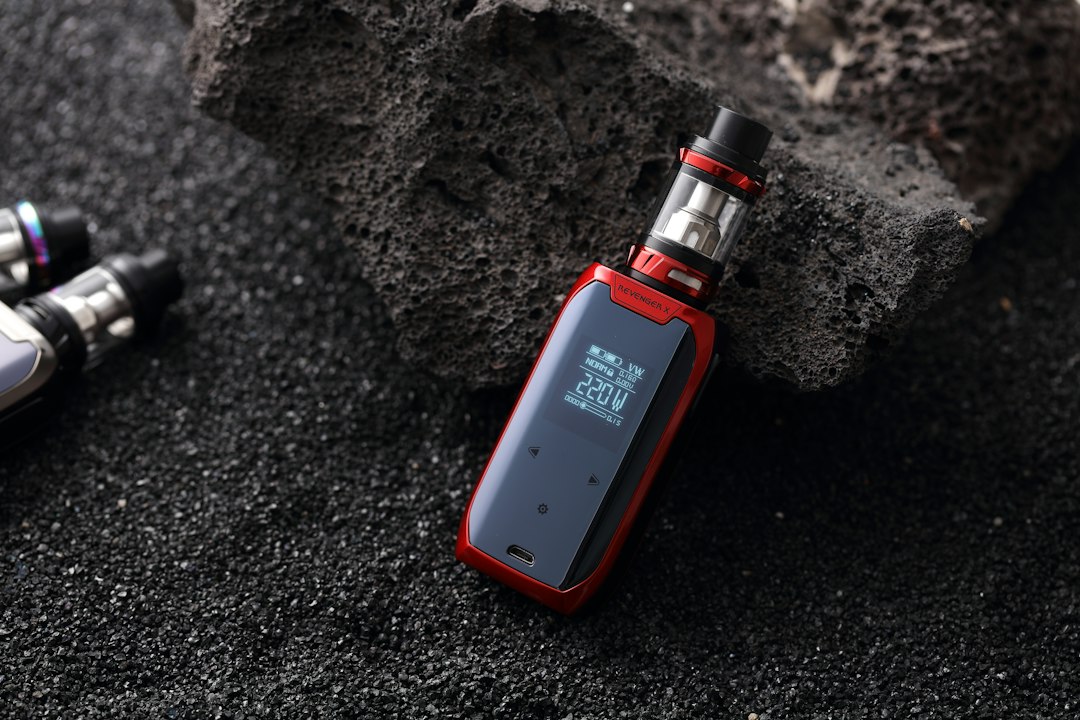
A built-in counter may record activations that its electronics detect. It does not necessarily measure the mass of aerosol produced, the quantity of liquid depleted or the amount of nicotine reaching the body. Some counters can reset, and some devices display a count for a limited period rather than their whole lifetime.
An electronic count on the screen and a package’s “up to” lifetime claim are therefore not always comparable. Consult the manual for what the display on the exact device actually records.
Do not open the product or bypass electronic safeguards to investigate a display. If the counter malfunctions, use manufacturer support.
Do rechargeable devices have more accurate claims?
Not automatically. Recharging can make battery depletion less likely to determine the endpoint of a test, but the amount of liquid, coil performance and puff-testing conditions remain important. Some advertised counts refer to a package with multiple pods, not a single cartridge.
Make sure a comparison covers equivalent units: one pod versus a multipack, one device versus a refillable system, or a machine estimate versus a screen count.
The broader types of vapes guide distinguishes disposables, tanks, pods and mods, which helps interpret what part of a system a claim refers to.
How to assess a marketing claim
A more transparent manufacturer’s description explains the device tested, puff duration, methodology and what “up to” means. A disclosure may still be a claim from the manufacturer rather than an independent test, but it is more informative than an unexplained large number.
If two brands do not disclose comparable protocols, ranking them solely by puff number is weak analysis. The best answer to are vape puff counts accurate is to understand the conditions behind the number and avoid claiming more precision than the evidence supports.
Do not confuse a high puff rating with a safer inhalation experience. The CDC notes that e-cigarette aerosol can contain nicotine and other potentially harmful substances. People who do not use nicotine should not begin vaping because a product claims a long service life.
Frequently asked questions
Does “up to 20,000 puffs” mean exactly 20,000?
No. It generally means an estimate under certain conditions, not a guaranteed count for every unit or use pattern.
Why did a device stop before its advertised count?
Different draw patterns, liquid exhaustion, battery limitations, a worn coil or a faulty product are possibilities. Stop using a device that leaks, overheats or behaves abnormally.
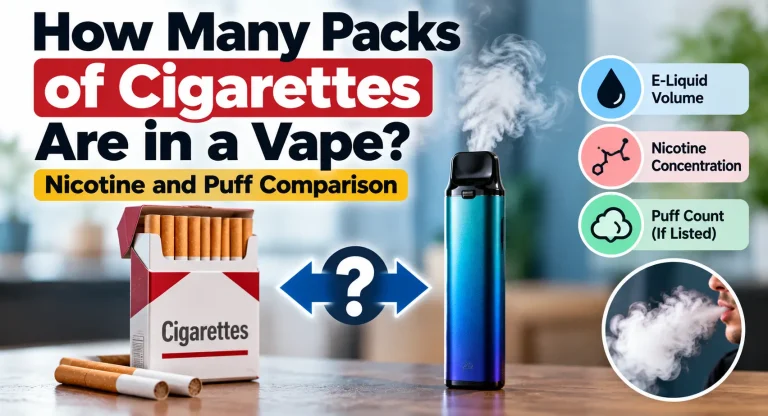
Can a puff count be converted into cigarettes?
Not meaningfully without information about nicotine concentration, aerosol delivery and absorption. A fixed conversion across products is misleading.
Are digital puff counters more reliable than package claims?
They may count activations, but that is different from verifying a lifetime laboratory estimate. Neither measures nicotine absorbed.
Do all vape brands use the same test duration?
No universal assumption is justified. Some manufacturers disclose their procedures; others provide too little information for a rigorous comparison.
Conclusion
Are vape puff counts accurate as a guarantee of personal use? No. They may reflect repeatable tests, but different methods and use patterns produce different results. Read the test disclosure, compare equivalent quantities and never treat a puff-count claim as proof of quality or safety.