What Is Vaping? How Vape Devices Work, What’s Inside, and the Risks
What is vaping? It means inhaling aerosol from an electronic device, usually an e-cigarette. Most conventional vaping devices use a battery to heat an e-liquid in a pod, cartridge or tank. The heating process produces an aerosol that can be drawn through a mouthpiece. Many e-liquids contain nicotine, although their ingredients and strengths vary considerably.
The visible cloud is not just clean water vapour. According to the US Centers for Disease Control and Prevention (CDC), e-cigarette aerosol can contain nicotine, fine particles, certain metals and potentially harmful chemicals. The exact mixture varies by product and how it is used.
For people asking what is vaping for the first time, understanding how these products work can help you interpret a nicotine label, identify device parts, assess a health claim or make sense of secondhand exposure. This guide focuses on the equipment, chemistry, evidence and safety questions rather than recommending use.
Table of contents
How does vaping work?
To explain what is vaping in mechanical terms, the basic process has four stages. A battery provides power, a heating element warms liquid supplied by a wick or cartridge system, aerosol is produced, and that aerosol passes through an airflow path to the mouthpiece. Some devices activate automatically when air is drawn through them. Others use a button and some allow adjustable power.
The US Food and Drug Administration (FDA) describes this underlying principle across disposable devices, closed pods and reusable tank systems. The way parts are replaced and charged depends on the specific design.
- Battery: Supplies electrical energy. It may be rechargeable or integrated into a single-use unit.
- Heating element: Converts electrical power into heat; it is often called a coil or atomizer.
- Liquid container: A pod, cartridge or tank stores e-liquid and supplies it to the heating assembly.
- Airflow and mouthpiece: Allow the generated aerosol to be drawn through the device.
- Control circuit: May regulate activation duration, power and certain electrical protections.
These descriptions are not instructions to open a sealed device. Lithium batteries can be hazardous if punctured, short-circuited or modified. Follow the product’s manufacturer instructions instead of attempting improvised repairs.
What is vaping aerosol made of?
An aerosol is a collection of fine droplets or particles suspended in air. It is different from pure water vapour. The composition of an e-cigarette aerosol depends on the ingredients in the liquid, the heating temperature, the equipment and patterns of use.
The CDC identifies possible constituents that include nicotine, tiny inhalable particles, volatile compounds and metals. Not every device produces every constituent at the same concentration. The presence of a chemical in a test does not alone establish the dose an individual inhales or the health effect they will experience.
Exhaled aerosol can also enter shared indoor air. People nearby may inhale some of its constituents. Our secondhand vape exposure guide explains why a disappearing visible cloud does not necessarily mean there is no exposure.
What ingredients are in vape liquid?
Conventional nicotine e-liquid often includes propylene glycol (PG), vegetable glycerin (VG), nicotine and flavourings. PG and VG help carry ingredients and form aerosol. Nicotine concentration can differ widely, and some formulations use nicotine salts. Products marketed as nicotine-free also exist, although labelling does not prove that a product is free from every contaminant.
An ingredient considered suitable for food is not automatically established as safe to inhale after heating. Cannabis vaping products use different extracts and should not be confused with standard nicotine e-liquid.
The concentration printed on a label is not the same thing as the amount a person absorbs. For example, a 10 mL bottle labelled 20 mg/mL contains a nominal 200 mg of nicotine in the total liquid. It does not mean someone inhales 200 mg. Puff duration, device characteristics and behaviour affect exposure. See our nicotine strength and percentage guide for more examples.
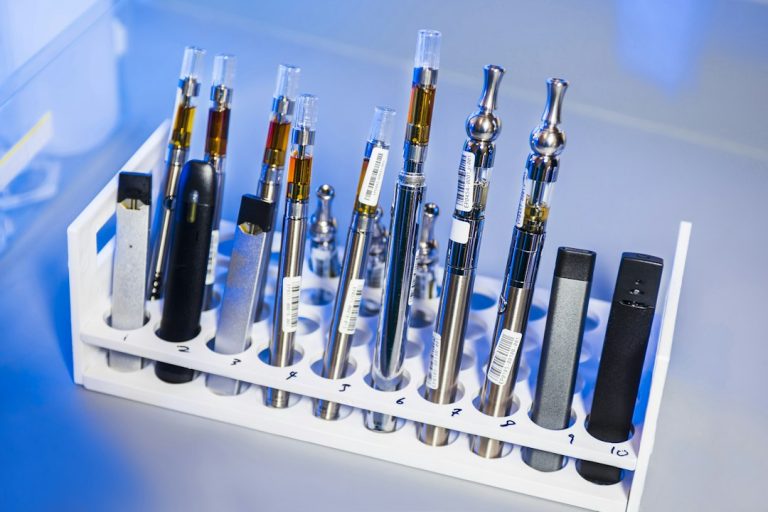
Different kinds of vaping devices
Disposable e-cigarettes
A disposable device generally combines its battery, liquid supply and heating assembly in one unit. Some designs can be recharged but are not intended to be opened, refilled or fitted with new internal components. A rechargeable disposable should not be mistaken for a repairable one.
Closed-pod systems
These use a reusable battery unit with manufacturer-compatible prefilled pods or cartridges. When a pod is empty or becomes defective, it is normally replaced as specified in the instructions. Compatibility cannot be assumed just because two pods look similar.
Refillable pod devices
A refillable pod holds liquid supplied by the user. Some models allow a coil to be replaced, while others require replacing the entire pod. A sealed pod is not necessarily intended for refilling, even when liquid can be seen through its casing.
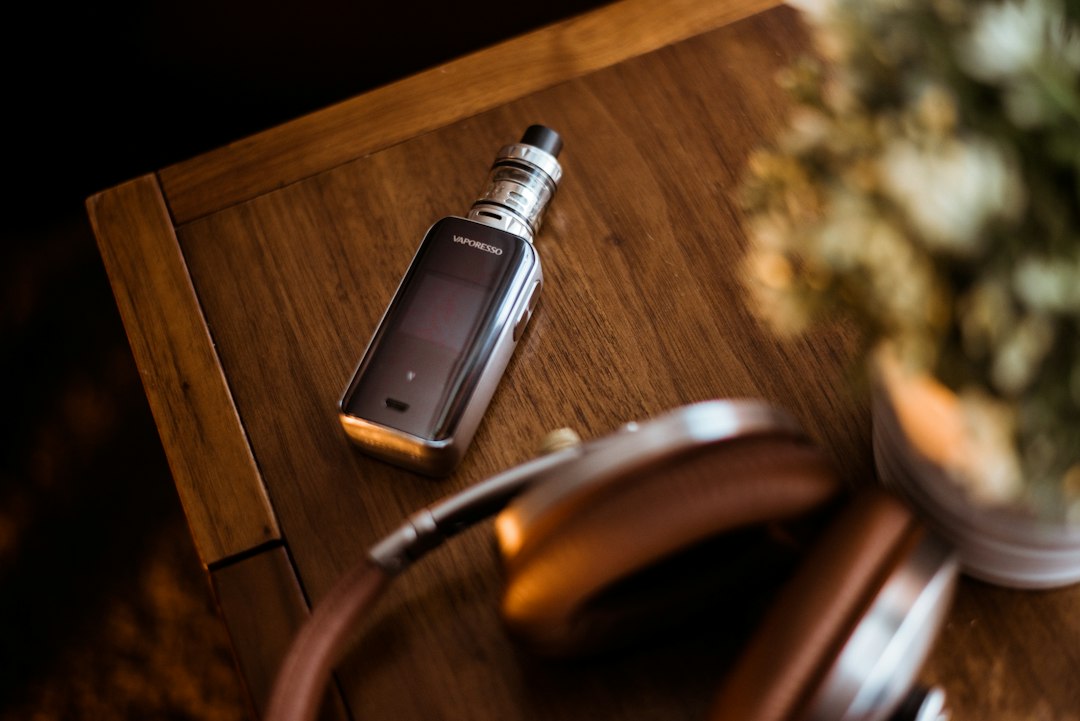
Tank and mod systems
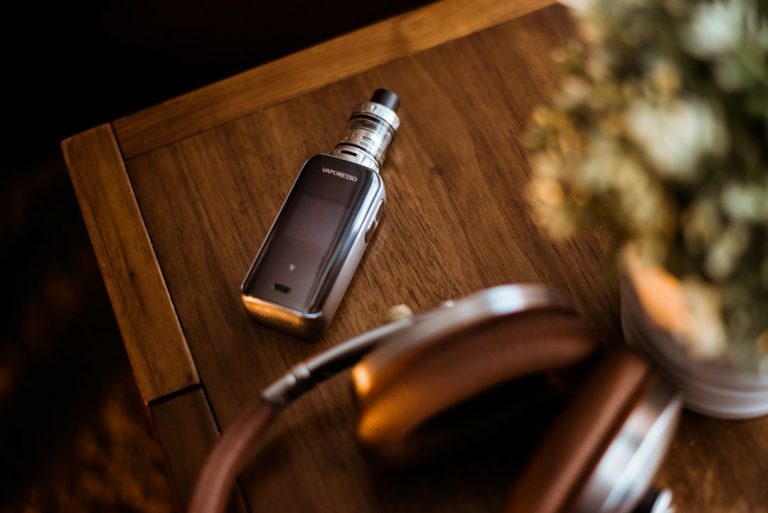
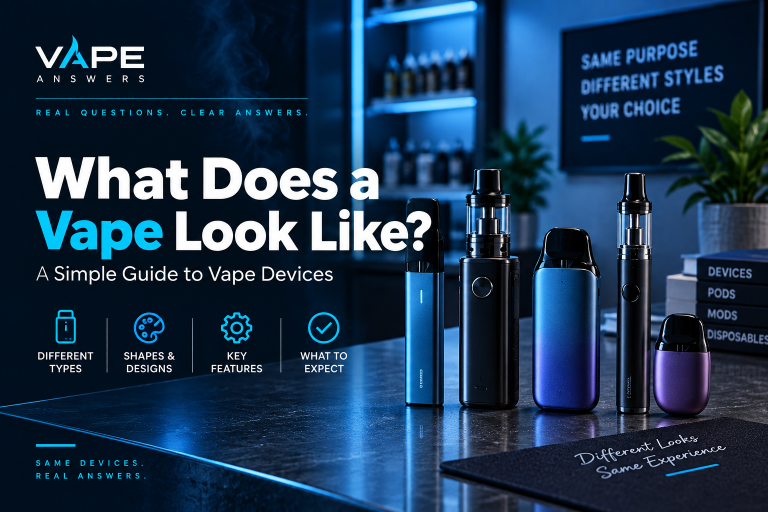
Tank systems may include larger reservoirs and adjustable controls. Their use depends on compatible hardware, batteries and operating ranges. Incorrect power settings or damaged components can increase safety risks. Our visual guide to vape devices shows common forms and names.
Is vaping the same as smoking?
No. A conventional cigarette burns tobacco and produces smoke through combustion. E-cigarettes generally heat liquid and generate aerosol without burning tobacco in the same way. That changes the mixture of chemicals, but it does not make vaping harmless or imply that the long-term consequences are fully known.
For a source-led comparison, read whether vaping is safer than smoking. Public-health assessments distinguish reduced exposure to certain combustion products from the absence of risk. Someone who already smokes cigarettes may reduce some harmful exposures if they completely replace smoking with an alternative, but dual use continues to expose them to cigarette smoke. E-cigarettes are not FDA-approved smoking-cessation medicines.
Children, adolescents, pregnant people and people who do not use tobacco should not start using vaping products. A healthcare professional can discuss established approaches to nicotine dependence and stopping smoking where relevant.
Main health and safety concerns
Nicotine and dependence
Many devices deliver nicotine, an addictive substance. Dependence can make it difficult to stop and nicotine exposure is particularly concerning during adolescent development and pregnancy. The perceived smoothness of an aerosol is not an indicator of how much nicotine is present.
Inhaling aerosol
Scientists continue investigating respiratory, cardiovascular and long-term outcomes. Aerosol may contain fine particles and compounds that are not harmless simply because a product is flavoured. Specific exposures and effects vary across products and people.
Poisoning and accidental exposure
Nicotine-containing liquid can be dangerous when swallowed or absorbed through inappropriate exposure, particularly for children and animals. Keep products secured. Contact a local poison service promptly if poisoning is suspected.
Lithium battery hazards
The FDA has documented reports of overheating, fires and explosions associated with e-cigarette equipment. Do not continue using or charging a device that is swollen, sparking, smoking, physically damaged or unusually hot. Refer to the FDA battery safety recommendations and the manufacturer.
Common misunderstandings
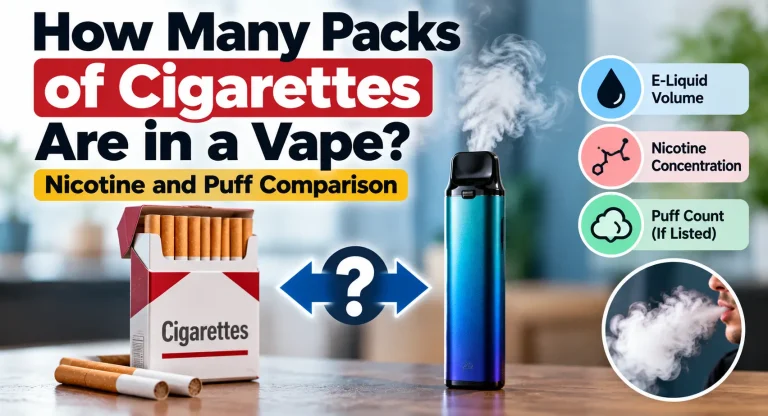
“It’s only water vapour.” Incorrect. The cloud is an aerosol and may contain nicotine and other compounds. “Every vape contains nicotine.” Also incorrect: some products are marketed without nicotine, but this does not automatically establish their safety. “Puff count equals cigarette count.” Incorrect: an advertised puff count does not measure absorbed nicotine.
If you are asking what is vaping because you saw a device, you may also want to read why people report vaping or the glossary of terms. Motivations for use should not be confused with proof of a health benefit.
Frequently asked questions
Can e-cigarettes contain nicotine even when they say zero?
Products marketed without nicotine exist, but independent testing has at times identified nicotine in products labelled otherwise. Ingredient labels are not guarantees of product quality. Safety and regulation vary by jurisdiction.
Is secondhand vaping harmless?
No. Bystanders may inhale part of the aerosol exhaled by a user. Exposure varies with ventilation, distance, product and usage, and a pleasant smell does not indicate harmlessness.
Does a high puff count mean a high nicotine dose?
Not necessarily. Puff-count claims are not standardized measurements of nicotine absorption. Concentration, liquid amount and real-world use are all relevant, so direct conversions to packs of cigarettes can mislead.
Does vaping always involve a disposable device?
No. Devices range from integrated disposables to reusable closed-pod, refillable-pod and tank systems. Each type has its own instructions and disposal responsibilities.
Bottom line
What is vaping? It is the inhalation of an aerosol generated by an electronic device, typically one that heats e-liquid. Different devices and liquids produce different exposures. Vaping differs from tobacco combustion but still carries nicotine, inhalation and battery risks. The most useful starting point is understanding what the device actually contains and what high-quality evidence does and does not establish.
Sources and editorial note
Key sources: CDC: About E-Cigarettes; CDC: Health Effects; FDA: ENDS Overview; FDA: Battery Safety. This article is general information, not personalized medical advice or a claim of clinical review.