Why Is My Vape Not Charging? Safe Checks and Common Causes
Why is my vape not charging? A charging failure may come from the cable, adapter, USB port, battery, or a built-in safety circuit. A charging light can also behave differently from what you expect. Check the exact model’s manual before testing anything. Do not open a sealed battery, bypass a safety feature, or connect improvised wires.
Manufacturer support pages provide a useful starting point. The Vaporesso FAQ discusses incompatible power sources, damaged cables, dirty ports, indicator warnings, and deeply discharged batteries. Innokin’s Klypse support recommends a compatible USB-C cable and approved charger, while explaining that rechargeable batteries lose usable capacity over time. These possibilities cannot establish the exact failure in an unfamiliar model.
Stop immediately if the device is hot to the touch, swollen, smoking, sparking, smelling electrically burnt, leaking into its battery compartment, or visibly crushed. Disconnect power if safe, move away from an immediate hazard, and seek manufacturer, hazardous-waste or emergency advice as appropriate. A damaged lithium cell must not be repeatedly tested.
Table of contents
Start with what the charging indicator does
To answer why is my vape not charging, observe the symptom instead of assuming the battery is dead. No light may indicate a missing power connection, damaged electronics, or a deeply discharged cell. A light that flashes without increasing charge may indicate a protection warning. A device that reaches full charge but will not produce aerosol could have an activation, pod, or coil issue instead.
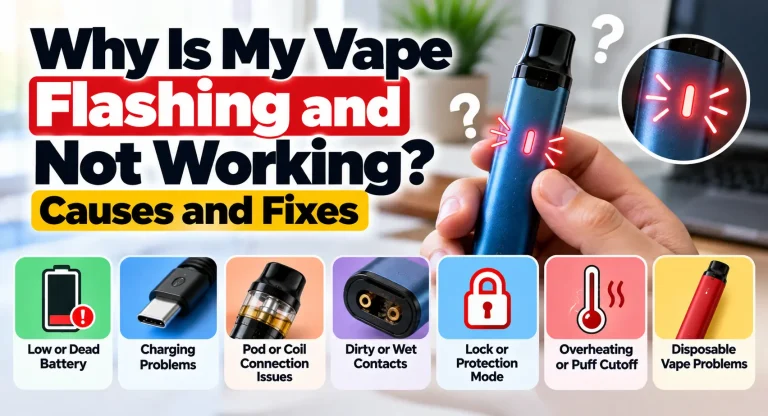
Some models use flashing colors or screen error codes for low voltage, short circuits, overheating or a disconnected atomizer. Their meanings are not standardized. Check the official indicator chart. If the device is flashing but not firing, see our separate flashing-device guide.
Six causes of a vape charging failure
1. A damaged or unsuitable charging cable
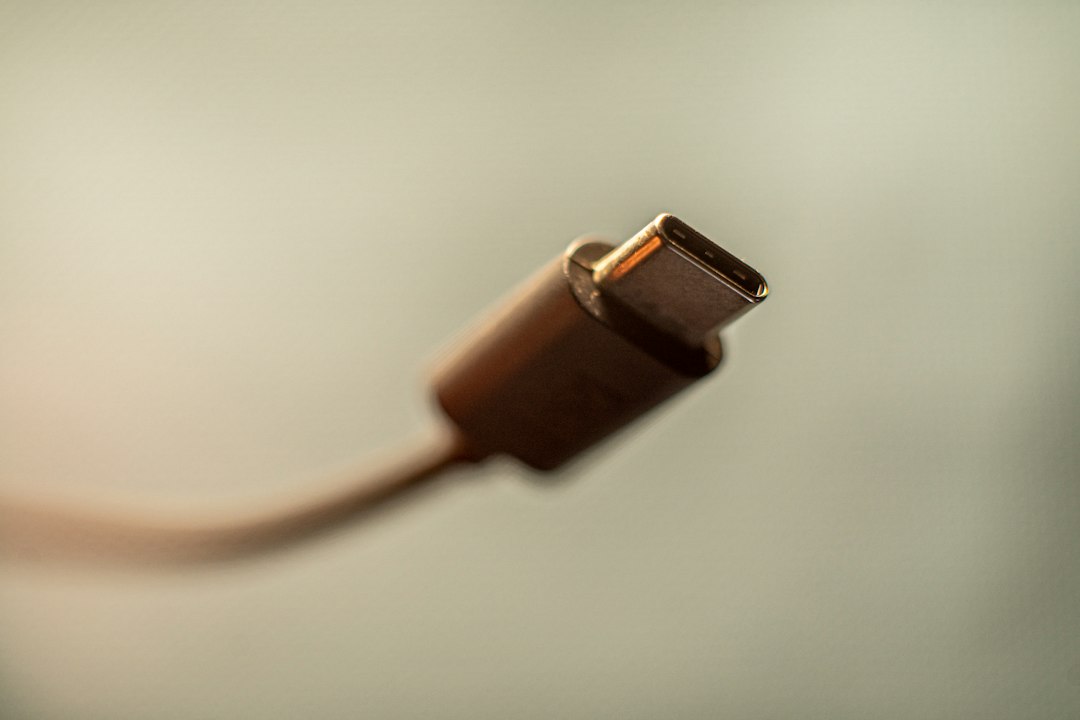
USB cables can fail internally even if their outer insulation looks normal. A connector that fits does not guarantee compatibility. Where the manufacturer permits and the equipment is undamaged, checking with a known-good, approved cable is a limited troubleshooting step. Never use exposed wires, frayed cables, makeshift adapters, or force a connector into the charging port.
2. The power adapter is not supported
An adapter might not supply the input the model requires. A high-power phone charger is not automatically appropriate simply because it has a USB connector. Read the device’s supported voltage and charging instructions. The FDA’s battery safety guidance recommends manufacturer-approved charging practices, a clear flat charging surface, and supervision while charging.
3. The USB port is wet, loose or damaged
Dust, lint, e-liquid or physical damage can interrupt a connector. Look at the port without opening the housing or inserting anything into it. Do not scrape electrical contacts with metal pins, apply cleaning liquids, or force a loose plug. Corrosion, moisture, melted plastic or a broken port are reasons to stop using the unit and contact an appropriate service provider.
4. The rechargeable battery has aged
When investigating why is my vape not charging after long storage, remember that lithium batteries gradually lose capacity through repeated charging cycles and storage. Some cells can also become deeply discharged after long periods without use. Vaporesso’s support guidance notes that a severely over-discharged battery may be permanently damaged. Do not try to jump-start it, wire another battery to it, or override the charging circuit.
5. A protective circuit has stopped operation
Temperature, short-circuit, low-voltage and abnormal-input protections can block normal charging. Treat the error as a warning, not an obstacle to bypass. A particular flashing sequence may have a different meaning across brands. Read the manual and stop if the warning persists. The safest way to address a suspected internal fault is through the manufacturer rather than repeated experiments with chargers.
6. The device is not designed for recharging
Some disposable e-cigarettes have a charging port and some do not. A non-rechargeable device must not be modified to accept power. Even when a disposable is rechargeable, it does not mean its battery is user-replaceable or its liquid chamber refillable. Do not drill holes or open a sealed casing to attempt charging.
A short safety checklist
- Identify the model and read its manual for approved cables, adapters, indicator meanings, and charging limits.
- Before any testing, look for swelling, excessive heat, sparking, smoke, damage, or liquid entering the electronics.
- For an intact device, only use a manufacturer-approved cable and suitable power source.
- Inspect the charging connector visually. Do not insert pins, tools, liquids or exposed wires.
- Charge only where you can monitor the equipment, away from bedding and flammable items.
- Stop if the fault persists, and contact the manufacturer instead of attempting internal battery repair.
A web checklist cannot determine whether a lithium cell has been damaged internally. An unresponsive battery is not automatically safe to keep charging overnight. The manufacturer’s documented instructions always take priority over generalized advice.
Why is my disposable vape not charging?
First confirm that the precise disposable model was sold as rechargeable. If it was not, do not try to adapt it. If it was designed for charging, the issue may still involve a cable, port, protection fault, defective cell or end-of-life equipment. A device that has exhausted its liquid cannot be restored by charging. Stop using a unit with a persistent charging problem and seek manufacturer support. For retired products, follow our safe disposal guide.
What if it charges but does not work?
Power and aerosol production are separate functions. The device might have charge but a disconnected pod, locked button, damaged heating element, or active protection state. Do not assume charging is the problem if the display reports another error. For models with supported user-replaceable components, follow only the official instructions. The Troubleshooting Center covers other symptoms.
When charging becomes a safety concern
Any device that becomes unusually hot, swells, smokes, sparks, leaks into electronics, or gives off a strong electrical smell must not be charged or used again. Battery fires and explosions appear uncommon but can cause serious injuries, according to the FDA. Our guide to vape battery fires and explosions explains warning signs and prevention. Stop testing and follow local professional guidance for safe handling or disposal. Do not drop a damaged lithium battery into household rubbish.
Frequently asked questions
Why is my vape not charging even with a different cable?
A cable is only one potential cause. An unsuitable adapter, port damage, degraded battery or internal protection fault could still be responsible. Stop repeated charging attempts if approved checks do not work.
Can I charge a vape with any USB-C charger?
No. A matching plug does not prove electrical compatibility. Always follow the model’s specified charger and input requirements, and avoid damaged cables or adapters.
Should I leave a dead vape plugged in overnight?
No. Do not leave vaping equipment charging unattended or while asleep. A persistently unresponsive battery may be faulty and requires manufacturer guidance rather than prolonged charging.
Is it safe to clean the USB port with a metal pin?
No. Metal tools and liquids can create or worsen electrical faults. Inspect visually and seek the manufacturer’s advice for any approved exterior maintenance.
Bottom line
Why is my vape not charging? The issue could involve the cable, adapter, port, battery, or device protection circuitry. Restrict checks to undamaged hardware and approved accessories. If the problem continues or battery warning signs appear, stop using and charging the device rather than overriding safeguards.
Sources and editorial note
References: Vaporesso device FAQ, Innokin Klypse support, and FDA vape battery safety. This is general educational information, not a device diagnosis, repair service, or endorsement of nicotine use.