Can a Vape Explode? Battery Warning Signs and Fire Safety
Can a vape explode? Yes. The lithium-ion battery inside an e-cigarette can fail, sometimes leading to rapid heating, fire, rupture or an explosive release of gas and burning material. These incidents appear uncommon, but they can cause serious injuries and property damage. A device that looks normal from the outside is not guaranteed to be fault-free.
The US Food and Drug Administration (FDA) warns about vaping-device battery fires and explosions and emphasizes following manufacturer instructions. The US Fire Administration (USFA) describes how lithium-cell failure can generate heat, pressure, sparks and flames. There is no reliable universal probability for every brand, battery or charging situation.
If a device is unusually hot, swelling, hissing, sparking, smoking or giving off an electrical burning smell, stop using and charging it. Keep your distance, get to safety and seek emergency help where there is fire or immediate danger. Do not attempt to dismantle a damaged battery or place it in water as a do-it-yourself repair.
Table of contents
How can a vape battery catch fire or rupture?
E-cigarettes are powered by small rechargeable lithium cells. If a cell suffers serious damage or an internal electrical fault, it can enter a process called thermal runaway. Heat generated inside the cell accelerates further reactions, potentially causing hot gases, fire and rupture. Battery failures can happen during charging, while a device is being carried, or during ordinary use.
The USFA identifies several possible contributing factors, including physical puncture, overheating, charging errors, short circuits, internal defects and manufacturing problems. These are broad failure mechanisms, not instructions for recreating them. No one can reliably diagnose a cell’s internal condition from a web article or a photograph.
What situations increase the risk?
Using an unsuitable charging cable or adapter
An electrical connector fitting into a port does not guarantee that the charger meets the device’s specifications. Manufacturer guidance should determine which adapter and cable are appropriate. The FDA advises charging on a clear flat surface, away from easily ignited materials, where the equipment can be observed. Do not charge a malfunctioning unit overnight or unattended.
Damage to the device or battery housing
A cell that has been crushed, punctured, dropped hard or bent may be unsafe even without an obvious external flame. Do not open a sealed disposable, pull on its battery wires or continue using equipment with a visibly swollen or broken housing. A replaceable battery should be handled only in the manner its manufacturer permits.
Loose batteries touching metal objects
Removable battery terminals can short if exposed to metal objects such as keys or coins. The USFA smoking and e-cigarette fire-safety guidance recommends storing loose cells in a protective case and away from metal objects. Do not carry an unprotected spare lithium cell in a pocket or bag.
Extreme heat and unsuitable storage
The FDA warns against leaving devices in direct sunlight, a very hot car or extreme cold. The USFA battery-safety guidance also emphasizes avoiding extreme temperatures and following the manufacturer’s storage and charging instructions. Temperature-related damage may not be visible from the outside.
Moisture, liquid intrusion or a defective unit
E-liquid in a pod is different from liquid reaching the charging electronics. A leaking device, corroded connector or wet battery compartment calls for caution. Do not keep charging equipment with suspected internal liquid damage. Manufacturer defects can also occur, and an apparently new device is not automatically safe.
Warning signs that a vape may be unsafe
When researching can a vape explode with warning signs, remember that a device can fail without giving an obvious warning. However, the following signs are reasons to stop immediately and obtain professional or emergency advice, depending on severity:
- The device or battery becomes unusually hot, even without being actively used.
- The housing or cell visibly swells, bulges or changes shape.
- There is hissing, crackling unrelated to normal activation, smoke, sparks or a sharp electrical smell.
- The charging port is melted, loose, scorched, wet or visibly damaged.
- The device activates unexpectedly, repeatedly reports electrical faults, or stops charging normally.
- The battery compartment has been crushed, punctured or exposed to water or leaking liquid.
The London Fire Brigade advises discontinuing use if batteries become unusually hot, bulge or hiss. These symptoms do not establish that an explosion is certain, but the potential consequences are serious enough that continuing to use or charge the equipment is unsafe.
Can a vape explode while charging?
Yes. Charging faults can contribute to lithium-battery fires, and historical incident reviews have included failures during charging. They have also documented events while a device was in a pocket or actively being used. It is misleading to assume a battery is safe whenever it is unplugged, or that charging is the only dangerous situation.
Use the equipment and charging source specified by the manufacturer. Keep charging visible on a clear surface, never under bedding or on a sofa, and unplug it if abnormal heat, smoke, swelling or other warning signs develop. If a device stops charging or displays persistent fault codes, see our charging-problem guide. Do not bypass protections or attempt home battery reconstruction.
Can disposable vapes explode?
Yes. A disposable e-cigarette can also contain a lithium-ion cell. Some disposable devices are rechargeable, but that does not make them refillable or user-serviceable. A sealed unit that has stopped working should not be cut open to retrieve the battery or connected to improvised chargers. Retired units need appropriate electrical or hazardous-waste collection.
A device is not safe simply because its battery indicator is off. If its case is damaged, it leaks near electronics, or its cell appears swollen, contact an appropriate collection program for guidance rather than placing it in normal household rubbish. Our safe vape disposal guide explains why these products do not belong in curbside mixed recycling.
Can a vape explode in a pocket?
Battery-related incidents can occur away from a charger. The USFA has documented historical fires and ruptures involving e-cigarettes carried on a person, including cases where loose batteries or other hardware may have been exposed to damaging conditions. Do not place loose lithium cells beside metal objects or keep using a damaged device.
Historical fire reports do not tell us the present-day failure rate of a particular model. The number and types of devices have changed, and reporting methods vary. Treat older case counts as evidence that incidents can happen, not as a percentage forecast for every user.
How to reduce fire and explosion risks
- Follow the exact device and battery manufacturer instructions for charging, use and storage.
- Use a compatible, undamaged power source and cable; do not assume every USB charger is appropriate.
- Charge only when you can monitor the equipment on a clear, flat surface away from combustible materials.
- Never open, puncture, crush, short-circuit or attempt to modify a sealed lithium battery.
- Store user-removable spare batteries in suitable cases, away from keys, coins and other metals.
- Avoid extreme heat, direct sunlight and water exposure, including leaving devices in hot vehicles.
- Stop immediately if the device is swollen, abnormally hot, sparking, smoking, hissing or visibly damaged.
What to do if a vape catches fire or starts smoking
Your safety comes first. If a device is smoking, sparking, swelling rapidly or burning, do not hold it, try to open it or move close to inspect it. Leave the immediate area and alert others. If there is fire or an immediate risk, call local emergency services and follow their instructions. Do not attempt to fight a lithium-battery fire without appropriate training and equipment.
The London Fire Brigade advises leaving the property and calling emergency services if a vape catches fire or explodes. Its October 2026 incident report also describes a flat fire that investigators believed was likely caused by a lithium battery in a vape. That is an individual investigation, not evidence that every device has the same risk.
Frequently asked questions
Can a vape explode without being charged?
Yes. A serious battery fault can arise while a device is being used or carried as well as during charging. Sudden heat, swelling, sparks or smoke are reasons to get away from the device and seek help.
Can a vape explode if it gets wet?
Water or liquid intrusion may damage electronics and electrical connections. A wet, damaged or malfunctioning unit should not be charged or tested. Consult manufacturer support and appropriate hazardous-waste services.
Does a flashing light mean a vape will explode?
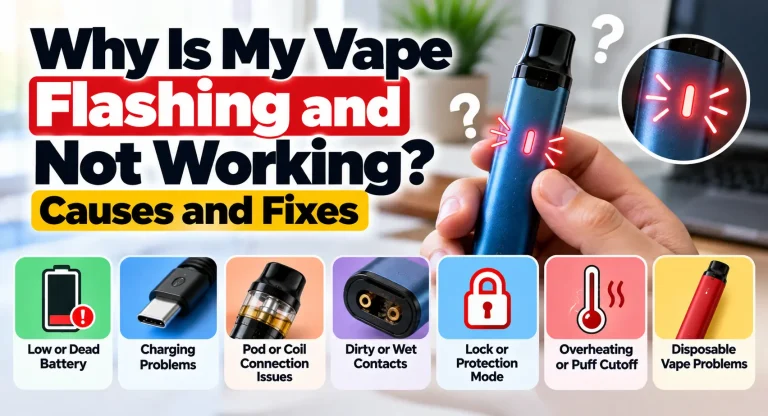
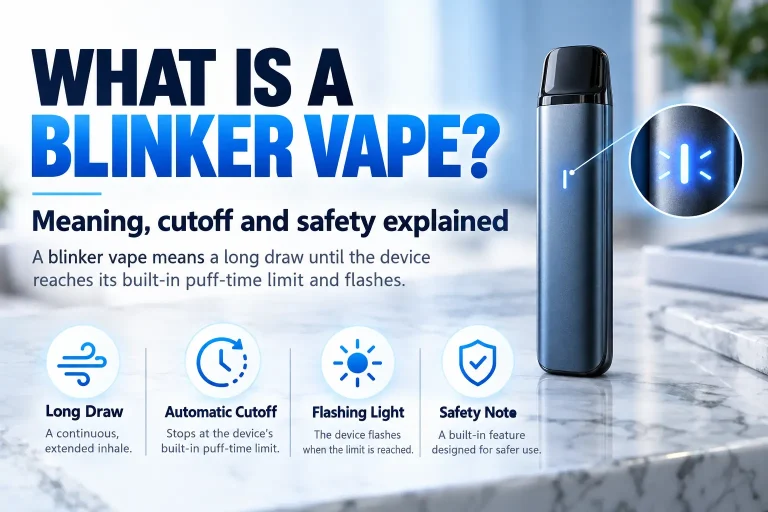
No. Flashing indicators can communicate ordinary low charge, a locked device or various error states. A flash pattern alone cannot predict an explosion. Persistent electrical faults combined with heat, swelling or damage are reasons to discontinue use immediately.
Is it safe to leave a vape charging overnight?
No. Avoid charging unattended or while asleep. Use manufacturer-approved accessories and remain able to notice overheating or other warning signs.
Bottom line
Can a vape explode? Yes, although the FDA and USFA describe these events as uncommon. The main serious hazard is lithium-battery failure, which can cause fire, pressure release and injury. Proper handling and compatible charging can reduce avoidable risks but cannot guarantee that a device is free from defects. Stop using damaged or overheating products, and seek emergency help if they begin to smoke or burn.
Sources and editorial note
Key references: FDA: Vape Battery Fire Prevention; USFA: Electronic Cigarette Fires; USFA: Battery Fire Safety; London Fire Brigade: Vaping Safety; London Fire Brigade: October 2026 Incident. This article offers general educational safety guidance, not an electrical diagnosis or emergency response training.