
What Is a Blinker Vape? Meaning, Cutoff and Safety Explained
What is a blinker vape? A blinker is vaping slang for a long, continuous draw that lasts until a device reaches its built-in puff-time limit, cuts power to the heating element and typically flashes its indicator light. A blinker vape is not necessarily a special type or brand of vape. The term usually describes the hit itself or a device being used until its automatic cutoff activates.
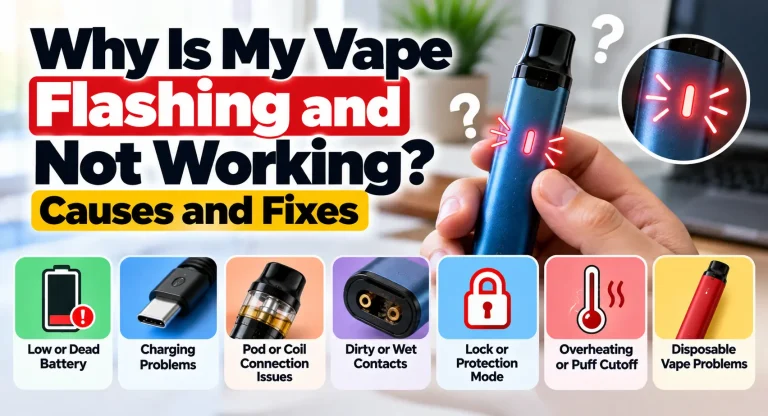
That distinction matters because a blinking vape does not always mean someone has “hit a blinker.” Depending on the device, flashing can also indicate low battery, a connection problem, overheating or another fault.
This guide explains the blinker vape meaning, how the cutoff works, how long it can last, what happens during a prolonged draw and why repeatedly trying to reach the cutoff should not be treated as a measure of vape quality or safety.
Table of Contents
- What a blinker vape means
- What hitting a blinker means
- Why vapes have puff cutoffs
- How long a blinker lasts
- Blinker vs. unexpected flashing
- What happens during a long draw
- Nicotine and aerosol exposure
- Device and battery considerations
- Common myths
- FAQs
What Is a Blinker Vape in Simple Terms?
The simplest answer to what is a blinker vape is that it usually describes reaching a vape’s automatic cutoff during one continuous draw.
When the programmed activation limit is reached, the device stops supplying power to the heating element and commonly signals the cutoff by flashing its LED.
That flashing light is where the slang comes from.
It is more accurate to think of a blinker as an event or type of hit rather than a distinct technical category of hardware. A regular vape pen, cartridge battery or disposable with an automatic cutoff may produce the flashing signal associated with the term.
However, not every device behaves in exactly the same way. Some use LEDs, some display messages, and manufacturers can program different protection systems and cutoff times.
What Does Hitting a Blinker Mean?
What does hitting a blinker mean? It generally means taking one continuous puff long enough to activate the vape’s automatic firing cutoff.
The device then stops powering the heating element and usually flashes its indicator light.
Online and social-media discussions sometimes frame reaching that limit as a challenge or achievement. Technically, however, the cutoff is simply the device ending an activation after its programmed maximum time.
The flashing light does not prove that a vape is more powerful, better quality or delivering a particular dose.
It tells you that the device reached a programmed limit or status condition.
This distinction is important because a vape can flash for reasons completely unrelated to a blinker hit.
Why Does a Vape Blink After a Long Draw?
To understand what is a blinker vape, it helps to understand why the cutoff exists.
Many regulated vaping devices limit how long the heating element can remain continuously activated.
When someone inhales on a draw-activated vape or presses the fire button on a compatible device, the battery supplies power to the heating element. If activation continues until the programmed time limit, the electronics can stop power delivery.
The device may then flash its LED to indicate what happened.
This prevents the heating element from remaining continuously powered during that activation.
The exact behavior depends on the manufacturer and model. A product manual is therefore more reliable than a generic online blink chart when you need to determine what a particular flashing pattern means.
If your device flashes unexpectedly and will not operate, rather than flashing only after a long draw, see our guide to why your vape is flashing and not working.
How Long Is a Blinker?
There is no universal answer to how long is a blinker.
Current vaping hardware uses different automatic cutoff periods. Eight-second and ten-second cutoffs exist in current devices, but other products can use different limits.
That makes statements such as “a blinker is always 10 seconds” inaccurate.
The actual cutoff duration should be confirmed through the specifications or instructions for the particular device.
This also makes stopwatch-style blinker challenges misleading. A blinker is defined by reaching the device’s own cutoff, not by reaching one universal number of seconds.
Two different vape batteries can therefore produce blinkers of different lengths.
Is Every Blinking Vape a Blinker?
No.
This is one of the most important distinctions in the article.
The slang “blinker” generally refers to flashing associated with reaching the end of a prolonged draw. A device can flash for several other reasons.
Depending on the model:
| When the Vape Flashes | What It Could Indicate |
|---|---|
| At the end of a prolonged draw | Automatic puff-time cutoff |
| Immediately when trying to fire | Battery, connection or protection condition |
| After inserting a pod | Pod or coil detection problem |
| While charging | Charging status or charging problem |
| Alongside abnormal heat or another fault | Protection system or malfunction |
These are general possibilities rather than universal error codes.
Manufacturers assign their own meanings to LED colors and flashing patterns. Check the instructions for your exact device when flashing occurs unexpectedly.
What Happens Inside a Vape During a Blinker Hit?
A vape creates aerosol by supplying electrical power to a heating element, which heats liquid delivered to the coil area.
During a blinker hit, that heating process continues for an unusually long single activation until the user stops drawing or the device reaches its cutoff.
What happens during that period depends on the hardware.
Factors such as power output, coil resistance, airflow, liquid composition, wick saturation and electronic regulation can all influence aerosol production.
This is why a longer draw does not translate into one predictable amount of aerosol across every vape.
It is also why claims that every blinker reaches a particular temperature or produces a specific dose are unreliable.
Can a Blinker Cause a Burnt or Harsh Hit?
A prolonged activation can produce an unpleasant hit if liquid delivery to the heating element does not keep pace with vaporization.
The wick in many devices is responsible for supplying e-liquid to the coil area. If it becomes insufficiently saturated, the resulting puff can taste dry, harsh or burnt.
Whether that happens depends on factors such as the device, coil, liquid formulation, power level and frequency of use.
Repeated long draws with little time between them can also keep the coil area hotter.
A burnt taste should not be treated as something that needs to be endured to complete a challenge. If the device tastes burnt or behaves abnormally, stop using it and check its instructions.
Does Hitting a Blinker Give You More Nicotine?
A longer puff can affect the amount of aerosol inhaled, but reaching the flashing cutoff does not represent a standardized nicotine dose.
Nicotine delivery from vaping products depends on multiple factors, including:
- Nicotine concentration
- Device power
- Coil and device design
- Puff duration
- Puff volume
- User behavior
That means two people reaching a cutoff on two different products cannot assume they received the same nicotine dose.
Health Canada states that nicotine is highly addictive. Exposure to excessive nicotine can also cause acute effects, with poisoning symptoms potentially including nausea, vomiting, dizziness, headache, confusion and abnormal heart rate.
A blinker should therefore not be used as a measurement of nicotine intake.
Are Blinker Hits Safe?
When someone asks what is a blinker vape, it is important not to turn the automatic cutoff into a recommended target.
The cutoff is a device limit. It is not a health guideline.
Vaping itself is not harmless. Health Canada states that vaping aerosol can expose users to nicotine and other potentially harmful substances.
A longer puff may produce more aerosol than a shorter puff under otherwise comparable conditions, but the amount varies according to the device and the way it is used.
The fact that a vape automatically stops firing does not mean everything before the cutoff has been established as safe.
The more accurate interpretation is simply that the device has reached its programmed continuous-activation limit.
Can Hitting Blinkers Damage Your Vape?
It is easy to find claims online that blinkers destroy coils, ruin batteries or dramatically shorten device life.
Those claims need qualification.
A long activation keeps the heating element powered for longer than a short activation, and repeated use can contribute to heat within the device. However, there is not a reliable universal figure showing how much a particular blinker hit shortens the life of every coil or battery.
Device designs vary too much for that conclusion.
The more important warning signs are abnormal behavior.
Stop using a vaping device if it becomes unusually hot, shows battery damage, swells or behaves unpredictably.
Health Canada advises consumers not to modify vaping devices and to follow manufacturer instructions for their use, charging and storage. Lithium-ion batteries can pose fire and explosion hazards if improperly used, stored, carried, charged or disposed of.
Can You Hit a Blinker on a Disposable Vape?
Yes, the slang can apply to a disposable if that device has an automatic puff-time cutoff that produces a flashing signal.
However, a blinker vape is still not necessarily a special category of disposable.
It can simply be an ordinary disposable being drawn on until its protection timer activates.
This distinction is useful because searches for “blinker vape” can make it sound like a defined technical product class.
In common slang usage, it usually refers to the cutoff event or the prolonged hit that triggers it.
If you are unfamiliar with modern vape formats, our guide to what a vape looks like explains disposables, pod systems, vape pens and other common designs.
Is a Blinker the Same as a Vape Flashing Because the Battery Is Dead?
No.
A low-battery warning and an automatic puff cutoff may both involve a flashing light, but they represent different situations.
A puff cutoff occurs when the device has remained activated for its programmed maximum continuous period.
A low-battery warning occurs because the battery has reached a threshold at which the electronics signal low power or prevent normal operation.
That is why context is more useful than simply counting flashes.
If a vape flashes immediately and produces no aerosol, do not assume you have hit a blinker. Check its instructions and troubleshoot the battery, pod, coil or connection as appropriate.
Is a Blinker Vape a Special Product?
Usually not.
Current SERP usage overwhelmingly treats “blinker” as slang for the action of taking a prolonged vape draw until the automatic cutoff activates.
However, product and brand names can use similar terminology.
Context therefore matters.
When someone says “I hit a blinker,” they generally mean they continued drawing until the vape cut power and flashed.
When someone refers to a specific product named Blinker or Blinkers, they may instead be talking about a brand.
This article uses the common slang meaning.
Common Myths About Blinker Vapes
Myth 1: A Blinker Is a Special Type of Vape
Usually, no.
The blinker vape meaning generally relates to reaching an automatic cutoff, not to a separate technical category of vaping device.
Myth 2: Every Blinker Lasts 10 Seconds
No.
Some devices have eight or ten-second cutoffs, but there is no universal duration that applies to all vaping hardware.
Myth 3: Reaching the Blink Proves a Vape Is Powerful
The LED does not provide a standardized measurement of power, aerosol production, nicotine delivery or product quality.
It primarily communicates a status determined by the device.
Myth 4: The Cutoff Makes a Long Hit Harmless
No.
An automatic cutoff can limit continuous activation, but it does not establish a medically safe puff duration or make vaping harmless.
Myth 5: Every Flash Means You Hit a Blinker
No.
A device may also flash because of low battery, charging status, connection problems or another protection condition.
This is exactly why the existing VapeAnswers troubleshooting guide and this article satisfy different search intents.
Why Has the Blinker Term Become Popular?
“Blinker” is easy slang because the name describes exactly what the user sees: a light blinking when a prolonged activation reaches the cutoff.
The term has also become associated with online challenge-style content where reaching the device limit is treated as an accomplishment.
That framing can obscure what the signal actually means.
From a technical perspective, the blink is not a score or a standardized measurement of how large a hit was.
It is communication from the device.
If the flashing occurs predictably at the end of a prolonged activation, the puff timer may be responsible. If it occurs unexpectedly, troubleshooting is more appropriate than trying to reproduce the behavior.
Should You Try to Hit a Blinker?
There is no practical reason to treat the device’s maximum continuous firing time as a target.
Follow the manufacturer’s instructions for normal operation instead.
Do not attempt to bypass a cutoff or modify a device so it can fire longer. Health Canada specifically advises consumers not to modify vaping devices.
If a vape is adjustable, use compatible components and remain within the manufacturer’s supported settings.
If the device becomes unusually hot, damaged or swollen, stop using and charging it.
The cutoff is there to enforce a hardware limit. Reaching that limit repeatedly is not required for the device to function normally.
Frequently Asked Questions
What Is a Blinker Vape?
What is a blinker vape? It usually refers to a vape being used for one continuous draw until its automatic puff-time cutoff activates and the indicator light flashes. In common slang, “hitting a blinker” describes the hit rather than a unique type of vape.
What Does Hitting a Blinker Mean?
It means continuing a vape draw until the device reaches its programmed continuous-activation limit, stops powering the heating element and typically flashes its indicator light.
How Long Is a Blinker?
There is no universal duration. Eight and ten-second cutoffs exist in current hardware, while other devices can use different limits. Check the specifications for the exact device rather than assuming every blinker lasts the same amount of time.
Why Does My Vape Blink When I Take a Long Hit?
If the device operates normally and flashes only after a prolonged draw, it may be reaching its automatic puff-time cutoff. Confirm the behavior in the manufacturer’s instructions because flashing signals differ among devices.
Why Is My Vape Blinking Without a Long Hit?
That is probably not what “hitting a blinker” describes. Depending on the device, flashing can indicate low battery, charging status, a connection problem or another protection condition.