
Are Vapes Banned in Wisconsin? 2026 Laws and Restrictions Explained
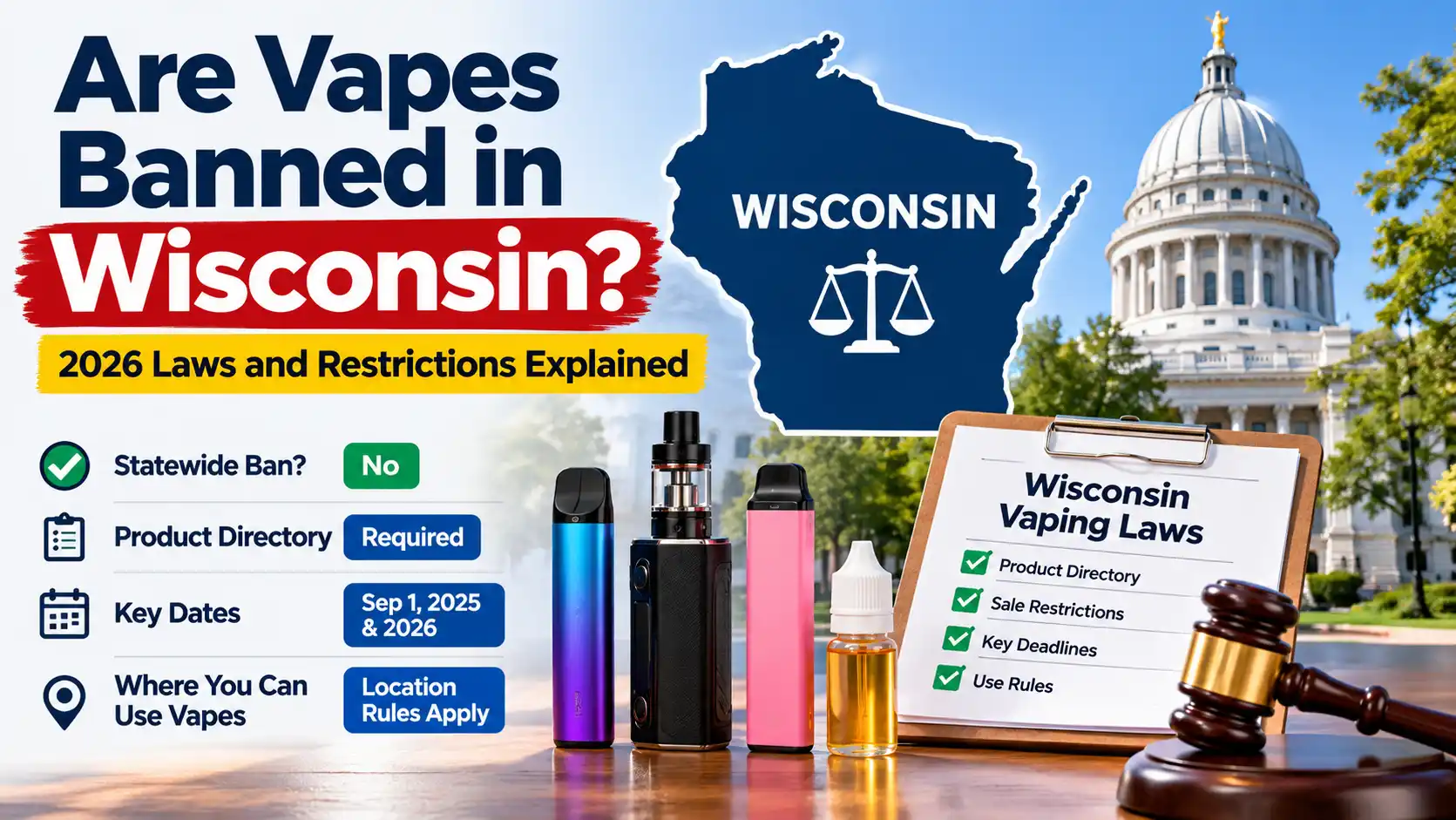
Are vapes banned in Wisconsin? No, Wisconsin has not introduced a blanket statewide ban on adult vaping. However, the state restricts the sale of electronic vaping products that are not listed in its official Electronic Vaping Device Directory. These restrictions have significantly affected which products retailers can legally offer.
Since September 1, 2025, most covered vaping products must appear in the state directory before they can be sold. Separate deadlines for qualifying nicotine-free hemp devices took effect during 2026.
For consumers, the important distinction is between owning a vape, buying one legally and using it in a particular location. Similar questions arise across the United States, where vape bans and restrictions differ by jurisdiction.
Table of contents
Are Vapes Illegal in Wisconsin in 2026?
Vaping itself is not completely illegal in Wisconsin. The state’s principal restrictions concern the commercial sale and distribution of electronic vaping devices.
Wisconsin’s directory law requires covered products to meet specified eligibility requirements before businesses may legally sell or offer them for sale.
This means a vape can be unavailable at a Wisconsin retailer even though the state has not prohibited every adult from possessing or using vaping devices.
Wisconsin Vape Laws at a Glance
| Question | Wisconsin Rule |
|---|---|
| Is adult vaping completely banned? | No blanket statewide prohibition |
| Can stores sell any vape product? | No, covered products must satisfy directory requirements |
| When did the main sales restriction begin? | September 1, 2025 |
| Minimum age to buy nicotine vapes | 21 under federal law |
| Are disposable vapes automatically banned? | No, legality of sale depends on applicable requirements |
| Are nicotine-free hemp devices exempt? | No, separate 2026 directory deadlines apply |
| Is vaping banned in every indoor public place? | Not under the statewide smoke-free law, but local restrictions may apply |
| Can vapes be mailed through USPS? | Generally prohibited, subject to limited exceptions |
These distinctions explain why the term Wisconsin vape ban can be misleading without additional context.
What Is the Wisconsin Vape Directory?
The Wisconsin vape directory is an official list of electronic vaping devices certified by manufacturers under state law.
It is maintained by the Wisconsin Department of Revenue (DOR).
The directory identifies products that have been certified as meeting Wisconsin’s statutory listing requirements.
Products that are not listed generally cannot be sold, offered for sale or possessed for sale after the applicable compliance date.
Which Products Are Covered?
Wisconsin defines electronic vaping devices broadly.
Depending on the product, the requirements can cover:
- Disposable e-cigarettes
- Rechargeable vaping devices
- Vape pens and similar electronic devices
- E-liquids and substances intended for aerosolization
- Certain components, parts and accessories
The law is not limited to traditional nicotine disposables.
An empty device may also require listing. The Department of Revenue specifically addresses empty devices and components in its official directory guidance.
How Can You Check Whether a Vape Is Listed?
Visit the official directory and search using the product’s manufacturer, brand, description or other available identifying information.
Check the specific product rather than assuming every device from the same brand has identical legal status.
The directory is updated regularly, so a product’s listing status can change.
A listing is a regulatory compliance matter. It should not be interpreted as a guarantee that the product is safe or risk-free.
When Did Wisconsin’s Vape Restrictions Take Effect?
Wisconsin’s directory requirements were introduced in stages.
Understanding the dates matters because the rules for nicotine products and qualifying hemp devices did not all become enforceable simultaneously.
| Date | Regulatory Development |
|---|---|
| July 1, 2025 | Initial manufacturer certification deadline for covered devices |
| September 1, 2025 | Main restrictions and penalties for selling unlisted covered devices began |
| April 21, 2026 | Federal appeals court affirmed denial of a preliminary injunction against the directory law |
| July 1, 2026 | Directory sales restrictions began for qualifying hemp devices without nicotine |
| September 1, 2026 | Specified daily forfeitures began applying to unlisted qualifying hemp devices |
What Happened in the 2026 Court Case?
Wisconsin’s directory law faced a federal legal challenge.
On April 21, 2026, the U.S. Court of Appeals for the Seventh Circuit affirmed a district court decision denying a preliminary injunction against enforcement.
The court concluded that the federal statutes at issue did not preempt Wisconsin’s authority to regulate sales and marketing in the manner challenged.
This ruling allowed the existing regulatory framework to remain enforceable at that stage of litigation.
It does not mean every possible legal issue involving the law has been permanently resolved.
Are Disposable Vapes Banned in Wisconsin?
The question are disposable vapes banned in Wisconsin does not have a simple yes-or-no answer for every product.
Wisconsin does not prohibit a device solely because it is disposable.
Instead, covered disposable products must meet the applicable directory requirements to be legally sold.
A disposable vape that is absent from the directory generally cannot be offered for sale after the relevant compliance date.
This distinction also applies to many rechargeable and refillable products. For comparison, our guide to North Carolina vape laws explains how another state regulates the sale of vaping products.
Are Flavored Vapes Banned?
Wisconsin’s directory framework is not simply a statewide prohibition on every flavored e-cigarette.
However, many flavored products may be unavailable because they do not qualify for listing or are not listed.
Consumers should not assume that a particular flavor is legal to sell merely because similar products remain available elsewhere.
The specific product’s directory status is more useful than its flavor name.
Are Nicotine-Free Vapes Allowed?
Nicotine-free labeling does not automatically exempt a vaping product from Wisconsin law.
The state’s directory definition covers a broad range of devices and substances.
For devices containing hemp but no nicotine, Wisconsin established a separate certification and enforcement timeline.
Those qualifying hemp devices became subject to directory sales restrictions beginning July 1, 2026, with specified forfeitures beginning September 1, 2026.
Other nicotine-free products must be assessed according to the applicable statutory definitions rather than assumed exempt.
What Is the Legal Age to Buy Vapes in Wisconsin?
The minimum legal age to purchase tobacco products, including nicotine-containing e-cigarettes, is 21 under federal law.
The federal Tobacco 21 requirement took effect on December 20, 2019.
The U.S. Food and Drug Administration also requires retailers to check photographic identification for customers under 30 attempting to purchase covered tobacco products.
These requirements apply to Wisconsin retailers regardless of older state-law language that may still appear in outdated online articles.
Where Can You Vape in Wisconsin?
Wisconsin’s statewide smoke-free air law does not currently include electronic cigarettes in its general indoor smoking prohibition.
However, this does not mean vaping is permitted in every public or private location.
Municipalities, counties, employers, educational institutions and property owners may impose additional restrictions.
Restaurants, Bars and Workplaces
A restaurant, bar or workplace may prohibit vaping under its own rules or applicable local ordinances.
Consumers should check the policy of the establishment before using a vape indoors.
Schools and College Campuses
Schools and colleges may maintain tobacco-free or vape-free campus policies.
These restrictions can apply to buildings, grounds and other areas under institutional control.
Parks and Other Public Spaces
Some Wisconsin communities have expanded local smoke-free ordinances to cover vaping.
Restrictions can include certain parks, public facilities and outdoor areas.
Can You Buy Vapes Online in Wisconsin?
Online sales are affected by federal shipping restrictions, age-verification requirements and Wisconsin’s product-listing rules.
A product being advertised online does not automatically mean it can legally be shipped to a Wisconsin consumer.
USPS Shipping Restrictions
The United States Postal Service generally treats electronic nicotine delivery systems as nonmailable.
Limited exceptions exist, but they do not establish unrestricted consumer shipping.
The restrictions can apply broadly to electronic vaping products, including certain nicotine-free devices.
PACT Act Requirements
The federal PACT Act imposes registration, reporting and delivery-sale requirements on covered sellers of electronic nicotine delivery systems.
These requirements operate alongside Wisconsin’s state-level rules.
Consumers should expect compliant businesses to verify age and comply with applicable delivery restrictions.
Wisconsin Vape Taxes in 2026
Wisconsin imposes a vapor products excise tax of $0.05 per milliliter on covered liquids or substances.
The tax generally applies to the volume of liquid or other substance associated with taxable vapor products, as defined by state law.
It is separate from applicable retail sales and use taxes.
For illustration, a taxable product containing 20 mL would correspond to $1 in vapor products excise tax at the statutory rate.
What Do Retailers Need to Know?
Businesses selling electronic vaping devices face requirements beyond ordinary age verification.
Manufacturers must certify eligible products for directory listing and pay the applicable annual certification fee.
The Wisconsin Department of Revenue states that the certification fee is $500 per device.
Paying the fee does not guarantee acceptance onto the directory.
Penalties for Selling Unlisted Products
Under the directory law, manufacturers and retailers can face forfeitures of $1,000 per day for each unlisted device sold or offered for sale after the applicable enforcement date.
Noncompliant products may also be subject to seizure and destruction.
Retailers should verify directory status before offering products for sale and monitor subsequent changes.
Licensing and Recordkeeping
Wisconsin retailers may also need appropriate municipal licenses and must comply with applicable recordkeeping, tax and age-verification obligations.
Frequently Asked Questions
Are Vapes Banned in Wisconsin for Adults?
Are vapes banned in Wisconsin for adults who already own one? There is no blanket statewide prohibition on adult possession or use. The major statewide directory restrictions regulate commercial sales, while local rules may restrict where vaping is allowed.
Can You Still Buy Vapes in Wisconsin?
Yes, but retailers must comply with applicable directory, licensing and federal sales requirements. Consumers should verify the specific product rather than assuming all vaping devices are legally available.
Is the Wisconsin Vape Ban a Flavor Ban?
Not exactly. Wisconsin’s main statewide restrictions operate through a product directory. Flavored products may disappear from retail shelves because they are not listed, rather than because every flavor is expressly prohibited by a single statewide flavor-ban provision.
Can You Buy Disposable Vapes in Wisconsin?
Certain disposable vapes can be sold when they meet the applicable legal requirements. The disposable format itself is not the deciding factor.
Are Hemp Vapes Banned in Wisconsin?
Qualifying hemp devices containing no nicotine are subject to Wisconsin’s separate 2026 directory deadlines. A product’s legal status depends on the relevant classification and listing requirements. Other laws governing hemp and controlled substances may also apply.
Is Vaping Allowed Inside Wisconsin Restaurants?
Wisconsin’s statewide smoke-free law does not generally include e-cigarettes, but local ordinances and business policies may prohibit indoor vaping. Check the rules for the particular location.


