
Can You Bring a Vape on a Plane? (2026 Travel Rules + Packing Checklist)
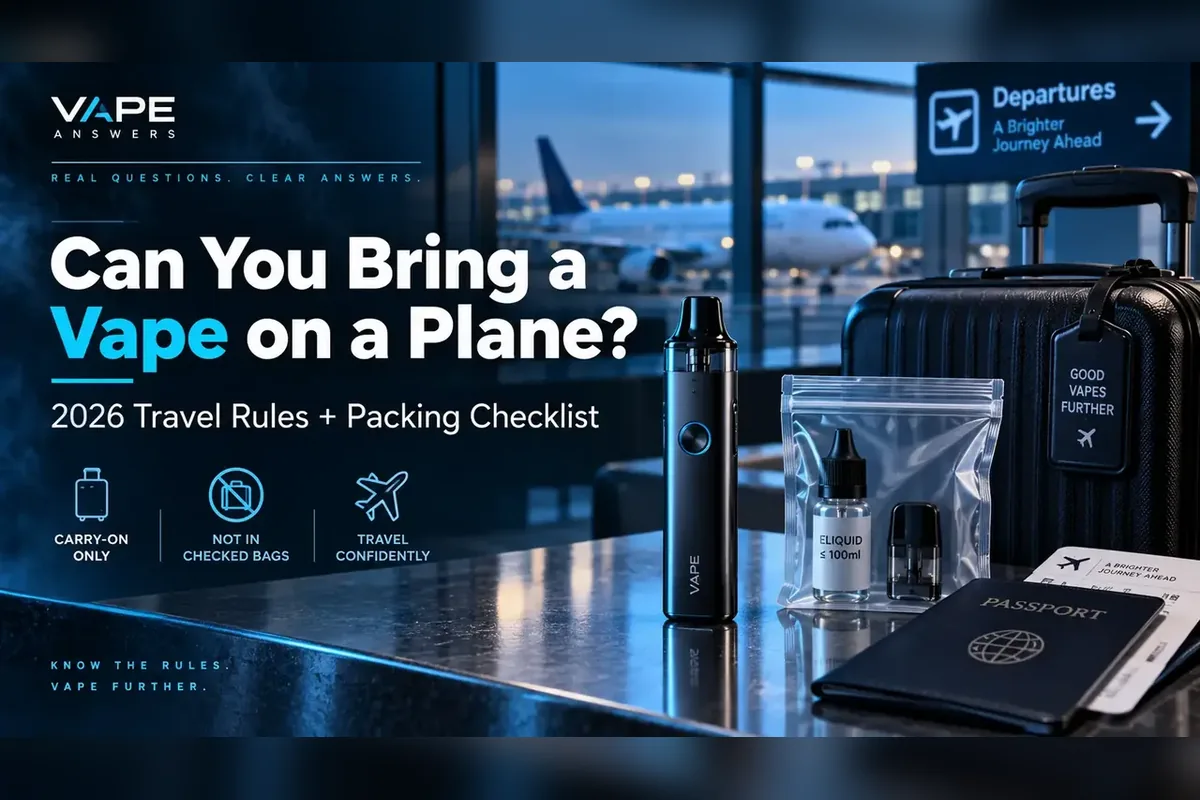
Flying with a vape is allowed on most airlines, but the packing method matters. A vape is a compact bundle of two things aviation regulators treat cautiously: lithium batteries and liquids. Pack it wrong and the best-case outcome is a delay. The worst case is losing the device before takeoff.
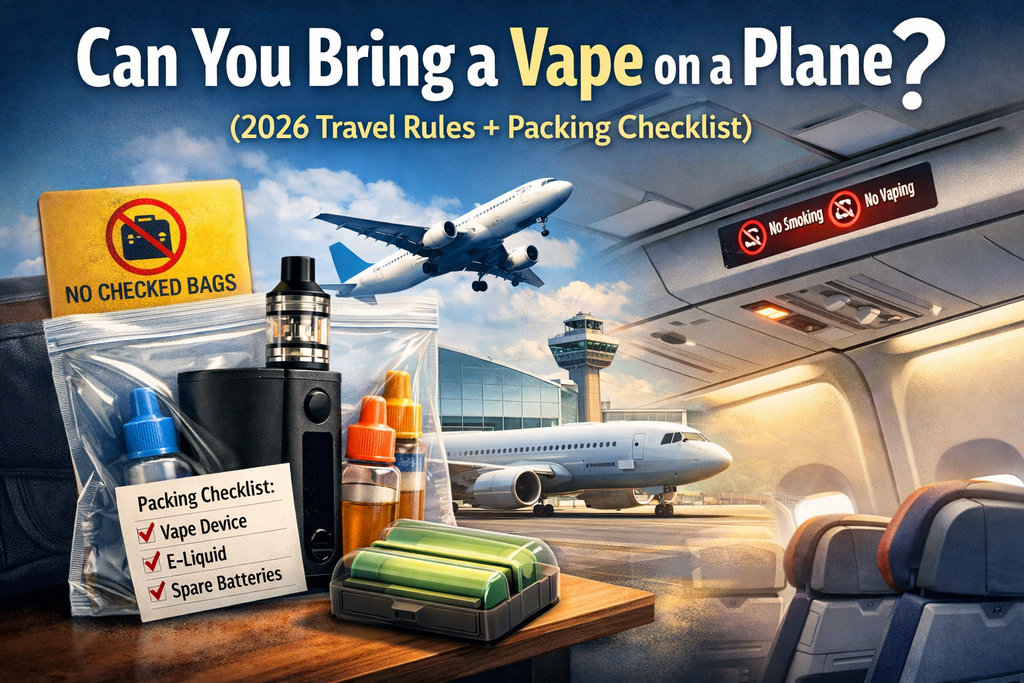
Table of contents
Bringing Your Vape on a Plane: Key Takeaways
- Vapes and e-cigarettes are allowed in carry-on bags (and often on your person), but not in checked luggage under U.S. TSA guidance.
- Take “effective measures” to prevent accidental activation (think: power off, lock, protect the button).
- Vape juice, pods, and cartridges in carry-on must follow the liquids rule (3.4 oz / 100 ml containers inside one quart bag).
- Using or charging vapes onboard is prohibited under U.S. DOT rules and many airline policies.
- International vaping laws can be strict and can change quickly; verify import and possession rules before you fly.
How to Bring Your Vape on a Plane
Vaping Devices (Mods, Pod Systems, Vape Pens, Disposables)
Carry-on is the default. TSA’s “What Can I Bring?” guidance lists electronic cigarettes and vaping devices as carry-on only.
Different vape types can have different battery layouts, pods, tanks, and activation methods. If you are unsure which type of device you have, see our guide explaining what a vape looks like.
Before leaving for the airport:
- Power it down fully. Use the device’s lock function, or shut it off (not just sleep mode).
- Disable the firing mechanism. If it’s button-fired, lock it and consider a silicone button guard. If it’s draw-activated, remove the pod/tank so the airflow sensor can’t be triggered by pressure shifts or jostling.
- Keep it accessible. A small pouch in your personal item reduces rummaging at screening.
Disposables are simple but not foolproof. Treat them like any other battery device: keep them protected, upright, and out of heat.
Spare Batteries (18650/21700 and Similar)
Spare lithium batteries are where people get burned—sometimes literally.
- Carry spares in the cabin, not the hold. FAA guidance requires electronic smoking devices to be carried on your person or in carry-on baggage.
- Use a proper battery case. Loose cells rolling around with coins or keys is a short-circuit invitation.
- Know the common limit. TSA references the typical 100Wh threshold for lithium-ion batteries. Most vape batteries are far below this, but the rule still matters.
Bottled E-Liquid, Prefilled Pods, and Cartridges
E-liquid is screened like any other liquid in carry-on.
- Carry-on: containers ≤ 3.4 oz (100 ml), all inside one quart-size bag.
- Checked bag: additional e-liquid is usually easier here, subject to airline and destination rules.
Leak reality: cabin pressure changes can cause liquid to leak from tanks, pods, or bottles.
To reduce the risk:
- Empty tanks or keep them nearly empty.
- Seal bottles securely.
- Double-bag everything using sealed plastic bags.
Chargers, Cables, and Accessories (Coils, Pods, Tools)
- Cables and chargers are generally fine in carry-on.
- Coils, pods, and empty cartridges can usually be packed wherever convenient.
- Avoid loose metal clutter near batteries. Keep conductive items separated.
Exceptions and Edge Cases
- Removable-battery devices: keep removed batteries separately protected in carry-on baggage.
- Pocket carry: some airlines allow it, provided the device is protected against accidental activation.
- Gate-check surprise: if your carry-on is moved to the hold at the gate, remove your vape, spare lithium batteries, and power banks first.
Bringing Your Vape on a Plane Safely
Prevent Accidental Firing
Accidental activation is one of the main reasons electronic smoking devices require special handling.
Best practices include:
- Hard power off plus lock mode
- Pod or tank detached when practical
- Device stored in a protective case
- No loose storage alongside keys, coins, or other metal objects
Prevent Leaks and Mess
Use containment:
- Pods and cartridges in a small zip bag
- Bottles upright in a sealed bag
- Absorbent material around bottles if needed
The goal is to keep any leak contained inside your luggage.
Battery Safety and Thermal Runaway Avoidance
Battery-powered electronic smoking devices must be handled carefully because damaged or short-circuited lithium batteries can overheat.
Practical precautions:
- Do not travel with batteries that have damaged wraps.
- Do not carry damaged or crushed disposable vapes.
- Do not charge electronic smoking devices onboard the aircraft.
What Happens if You Put a Vape in Your Carry-On Bag?
This is generally the correct place for it under U.S. aviation guidance.
At security:
- Your bag is X-rayed.
- A large mod or multiple batteries may receive additional inspection.
- Keeping liquids organized and compliant can reduce unnecessary bag checks.
What Happens if You Put a Vape in Your Checked Luggage?
In the U.S., battery-powered portable electronic smoking devices are prohibited in checked baggage.
Possible outcomes include:
- The device being discovered during baggage screening
- The device being removed from your luggage
- Delays while the issue is resolved
- The device not traveling with you
The simplest rule is to keep the vape and spare batteries in the cabin.
How to Bring Your Vape Juice on a Plane
Carry-On: 3-1-1 Liquids Rule (100 ml / 3.4 oz)
E-liquids and filled pods or cartridges count as liquids for carry-on screening.
- ≤ 3.4 oz (100 ml) per container
- All liquids inside the permitted liquids bag
- Present the bag for screening when requested
Checked Bags: Packing Larger Quantities
For larger bottles:
- Use properly sealed bottles.
- Wrap bottles in absorbent material.
- Store them inside sealed plastic bags.
- Keep them away from electronics and valuable clothing.
Always confirm destination restrictions before packing larger quantities.
Can You Vape on a Plane?
No.
Using an e-cigarette or vape during a flight is prohibited on U.S. commercial flights, and airlines commonly prohibit charging electronic smoking devices onboard as well.
If nicotine withdrawal is a concern during a long flight, consider permitted alternatives such as nicotine gum or lozenges.
Can You Vape at the Airport?
Only where airport rules permit it.
Depending on the airport:
- Vaping may be limited to designated smoking areas.
- You may need to leave the terminal.
- Re-entering through security may be inconvenient or impossible during a short connection.
Do not assume that vaping is allowed simply because you are inside an airport.
Can You Buy Vape Juice and Replacement Coils Abroad?
Sometimes.
Availability varies by country because local rules may restrict:
- Vape sales
- Nicotine concentrations
- Disposable devices
- Flavours
- Imports
Pods and coils can also be device-specific, so travelers using less common systems may want to carry permitted replacement supplies.
Always Learn the Local Vaping Laws Before You Travel
International travel is where vaping rules become much more complicated.
A device that is legal to possess at your departure point may be restricted at your destination or even in a transit country.
Before traveling:
- Check the destination country’s customs or health authority guidance.
- Check your airline’s restricted-items policy.
- Check rules for airports and countries where you have layovers.
- Avoid carrying quantities that could appear commercial.
Airline rules and national laws are separate. Following your airline’s battery rules does not automatically mean importing the vape is legal at your destination.
What Do Some Top Airlines Say About Bringing Vapes on Planes?
Airline policies generally follow the same core principles: carry-on only, no use, no charging, and protection against accidental activation.
Examples include:
- American Airlines: electronic cigarettes are not permitted in checked baggage and cannot be used onboard.
- Delta Air Lines: vapes must remain in carry-on baggage or on the passenger, and use or recharging onboard is prohibited.
- British Airways: passengers must remove electronic cigarettes from cabin bags if those bags are placed in the hold.
- Ryanair: electronic cigarettes may be carried onboard but cannot be used during the flight.
- easyJet: vaping is prohibited onboard, devices must remain switched off, and charging is prohibited.
- Eurowings: electronic cigarettes must remain on the passenger or in hand luggage rather than checked baggage.
Always check the airline’s current policy before departure because requirements can change.
Important Note: International Vaping Laws Can Change Without Notice
Country-level vaping laws can change faster than general airline battery rules.
Import bans, possession restrictions, nicotine limits, and enforcement policies may differ considerably between destinations.
Treat every international trip as a fresh compliance check rather than relying on the rules from your previous journey.
Frequently Asked Questions
How many vapes can you bring on a plane?
There is no single universal number. Limits may depend on the airline, battery capacity, and destination rules. Keep devices protected, carry-on only, and clearly intended for personal use.
Can you bring a disposable vape on a plane?
Yes. A disposable vape should generally travel in your carry-on or on your person, protected against accidental activation, damage, short circuits, and excessive heat during the journey.
Can you bring a vape pen on a plane?
Yes. Vape pens are electronic smoking devices and should generally remain in your carry-on baggage or on your person rather than being placed inside checked luggage.
Can you bring a Vuse vape on a plane?
Generally, yes. A Vuse device is handled like other electronic cigarettes: keep it in carry-on baggage, prevent accidental activation, and do not use or charge it onboard.
Can you bring vape juice on a plane?
Yes. Vape juice in carry-on baggage must comply with applicable airport liquid restrictions, including the U.S. 3-1-1 rule limiting individual containers to 3.4 ounces or 100 millilitres.
Can you bring a THC vape on a plane?
Cannabis laws vary significantly. In the United States, marijuana remains illegal under federal law with limited exceptions. Travelers should check applicable federal, state, destination, and transit-country laws before flying.
Can you bring a CBD vape on a plane?
It depends on the product and jurisdiction. CBD and hemp laws vary between locations, so travelers should verify product composition and legality at departure, transit, and destination points.
Can you bring a THC vape on an international flight?
This can carry serious legal risk. Many countries tightly regulate cannabis products regardless of where they were purchased. Check destination and transit laws before carrying any THC-containing product internationally.
Can you bring a vape on a plane to Mexico, Canada, Ireland, or the UK?
Airline battery rules may be similar, but national import, possession, nicotine, and product rules differ. Check official customs and health guidance for every destination and transit country before departure.
Can you bring a vape on Southwest, Delta, or American Airlines?
Policies generally require electronic smoking devices to remain in carry-on baggage or on the passenger. Exact requirements can change, so confirm your airline’s current restricted-items policy before traveling.
Can TSA take your vape out of your carry-on?
A vape may be inspected during security screening. Electronic cigarettes are permitted in carry-on baggage under TSA guidance when applicable safety requirements are followed, but screening officers can inspect suspicious items.
Can you charge your vape on the plane?
No. Electronic smoking devices should not be charged onboard an aircraft. Keep the device switched off and protected against accidental activation throughout the flight.
Final Travel Checklist
Before leaving for the airport:
- Vape device in carry-on, not checked baggage
- Device completely switched off
- Accidental activation prevented
- Spare batteries protected individually
- No damaged battery wraps or damaged disposables
- Vape juice within applicable liquid limits
- Pods and bottles sealed against leaks
- Airline policy checked
- Destination vaping laws checked
- Transit-country laws checked
- No intention to use or charge the vape onboard
Following those basic steps eliminates most avoidable problems associated with flying with a vape.
For more airport, airline, packing, and destination-specific guidance, browse the VapeAnswers Travel section.
Travel & Aviation Note
Airline, airport, battery and destination rules can change. This guide provides general travel information, not legal advice. We research travel-rule claims under our Editorial Policy and Fact Checking standards, prioritizing current aviation-authority and airline guidance. Check your airline and the relevant official authorities before departure.